
How to Understand HVAC Duct Cleaning Cost Factors in Tampa
When a home’s ductwork goes uncleaned for years, the buildup quietly compounds. Dust, humidity-fed mold spores, and debris accumulate inside every supply and return run, and the system works harder to push conditioned air through increasingly restricted passages. In Tampa, where air conditioning runs nearly year-round and the subtropical humidity never really lets up, that buildup accelerates faster than it does in drier climates. By the time most homeowners start asking about pricing, the job is often more involved than they expected, not because services are overpriced, but because the condition of the ductwork has drifted further than they realized.
Understanding what actually drives the cost of a residential duct cleaning helps you evaluate quotes accurately, ask the right questions, and avoid surprises on the day of service. This step-by-step guide walks through every major factor so you can approach the conversation with a contractor from an informed position. For a broader look at what the service involves and why it matters locally, see our complete guide to air duct cleaning in Tampa.
Before You Start: What Affects Pricing Is Not One Thing
- The square footage of your home and the number of supply and return vents
- The type, age, and material of your ductwork (flex duct, sheet metal, fiberboard)
- How accessible the ducts are (attic, crawlspace, slab, interior walls)
- The level of contamination, light dust versus heavy debris, microbial growth, or pest intrusion
- Whether the system has been serviced before or has never been cleaned
- Any add-on services needed, such as sanitizing, coil cleaning, or vent cover replacement
- Local market conditions and the equipment a contractor brings to the job
No two Tampa homes present the same combination of these factors, which is why a meaningful quote requires a look at your specific system. The steps below break down each driver in detail.
Step 1: Measure the Scope by Square Footage and Vent Count
The single most consistent pricing variable is the physical size of the duct system. A small bungalow in Seminole Heights with one air handler and eight supply vents requires far less time, equipment setup, and labor than a two-story home in New Tampa with dual systems and thirty or more registers. Contractors typically use a combination of square footage and vent count to establish a baseline scope for the job.
When you request a quote, have a rough sense of your home’s conditioned square footage and, if possible, walk through and count the supply vents (the ones that blow air out) and return vents (the larger grilles that pull air back to the air handler). That information helps a technician give you a more accurate estimate before they arrive.
Step 2: Identify Your Duct Material and Age
Tampa’s housing stock spans several decades and several generations of duct materials, and the type you have affects both the cleaning method and the time required. Older homes, particularly those built before the 1990s in neighborhoods like Hyde Park, Palma Ceia, or Carrollwood, may have rigid sheet metal ductwork, which is durable and generally easier to clean with high-powered negative air equipment. Homes built during the construction booms of the 1980s through 2000s frequently used flexible duct (flex duct), which is lighter and less expensive to install but more prone to sagging, kinking, and interior liner deterioration over time.
Fiberboard duct, another material found in older Florida construction, presents its own considerations: the porous inner surface can harbor contaminants more deeply than smooth metal, and aggressive cleaning can damage the liner if not handled carefully. If your ductwork is approaching or past the 15-to-20-year mark, it is worth asking the technician to assess its condition during the cleaning visit. For more on what that inspection involves, the ductwork inspection questions guide covers what to ask and what to look for.
Step 3: Evaluate Duct Accessibility in Your Home
One of the most underappreciated cost factors is how easy or difficult it is to physically reach the ductwork. In Tampa, the majority of single-family homes run ductwork through unconditioned attic spaces, which are accessible but can be brutally hot during service visits, a factor that affects how long technicians can safely work in short intervals. Homes built on slabs (common throughout the Tampa Bay area) sometimes have ductwork embedded in or just below the concrete floor, which is significantly harder to access and service than attic-run systems.
Multi-story homes introduce vertical runs inside wall cavities, and homes with finished ceilings over duct chases may require more creative access strategies. The more difficult the access, the more time the job takes, and that time is reflected in the final scope. When you describe your home to a contractor, mention whether your ducts run through the attic, under the floor, or through interior walls, that detail alone can shift the estimate meaningfully.
Step 4: Assess the Level of Contamination Honestly
A system that receives regular filter changes and has been cleaned within the past several years will typically present light-to-moderate dust accumulation. A system that has never been professionally cleaned, or one in a home that recently underwent renovation work, may have significantly heavier debris loads, drywall dust, insulation fibers, construction particulate, or years of compacted lint and pet hair near the return grilles.
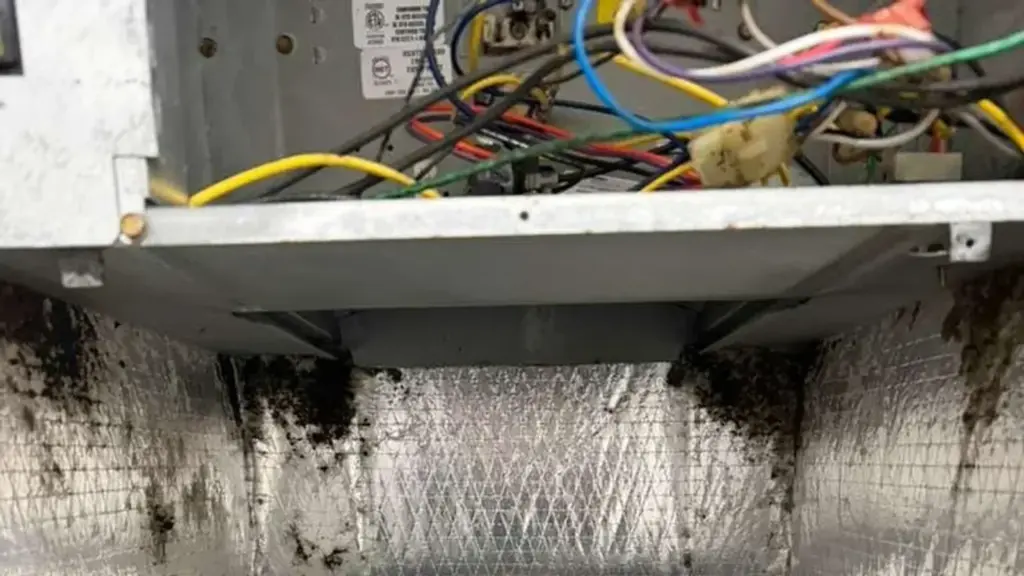
Microbial growth is a separate consideration. Tampa’s humidity levels, which regularly exceed 70% for much of the year, create conditions where moisture intrusion into a duct system can support mold growth on interior surfaces. If a technician identifies active microbial contamination, remediation adds scope beyond standard mechanical cleaning. The connection between Tampa’s humidity and duct contamination explains why this is a more common finding here than in drier regions, and why it matters for your system’s long-term performance.
Being upfront about your home’s history, recent water intrusion, musty odors from vents, visible growth near registers, helps a contractor scope the job accurately from the start rather than discovering complications mid-service.
If you want it handled correctly the first time, consider professional air duct cleaning in Tampa.
Step 5: Factor In Whether Add-On Services Apply
A standard residential duct cleaning covers the supply and return ductwork, the air handler cabinet, and the registers. Several additional services are sometimes recommended based on what a technician finds during the process, and each one carries its own scope and cost.
- Sanitizing or antimicrobial treatment: Applied after mechanical cleaning when microbial contamination has been identified or when a homeowner wants an added layer of protection. The product and application method matter, ask what is being used and whether it is EPA-registered for HVAC use.
- Evaporator coil cleaning: The coil sits inside the air handler and is a common collection point for dust and biological growth. If it has not been cleaned in several years, adding it to the service visit is often more efficient than scheduling a separate appointment.
- Dryer vent cleaning: Not part of HVAC duct cleaning, but often bundled when a technician is already on-site. A clogged dryer vent is a fire and efficiency hazard, and combining both services in one visit can be practical for homeowners who need both addressed.
- Vent cover cleaning or replacement: Registers and grilles accumulate surface dust that a standard cleaning addresses, but heavily corroded or damaged covers may need replacement. This is typically a minor add-on cost.
Ask upfront which of these are included in a quoted price and which are priced separately. A detailed scope of work in writing protects both you and the contractor.
Step 6: Understand How Equipment Quality Influences the Job
The equipment a contractor uses directly affects how thoroughly the system is cleaned and how the job is priced. Truck-mounted negative air machines with high CFM (cubic feet per minute) ratings are the industry standard for residential work, as they create the suction needed to dislodge and capture debris from deep within duct runs rather than simply stirring it around. Contractors using portable shop-vac-style equipment cannot achieve the same level of extraction.
NADCA (the National Air Duct Cleaners Association) publishes standards for residential duct cleaning that describe the equipment and process requirements for a thorough job. Asking a contractor whether they follow NADCA standards is a reasonable due-diligence question. Better equipment costs more to own and operate, and that is reflected in pricing, but it also means the work is done to a higher standard. Our Tampa air duct cleaning guide goes deeper on what a proper service visit should include from start to finish.
Step 7: Get Multiple Quotes and Compare Scope, Not Just Price
Once you have a clear picture of your home’s duct system, size, material, accessibility, contamination level, and any add-ons you need, you are in a much stronger position to evaluate quotes. The most important thing to compare is scope, not just the bottom-line number.
A quote that covers only the supply ducts and omits the return system, air handler, and registers is not comparable to a full-system quote even if the price looks similar. Ask each contractor to specify exactly what is included: which components are cleaned, what equipment they use, whether the air handler cabinet is part of the service, and how they handle debris containment during the job.
Written quotes are standard practice for reputable contractors. If a company provides only a verbal estimate or cannot describe their process in specific terms, that is worth noting before you commit. Checking whether a contractor carries liability insurance and, where applicable, state licensing is also a reasonable step for any home service of this scope.
Step 8: Ask About Frequency to Understand Long-Term Value
Pricing does not exist in isolation from frequency. A thorough cleaning that extends the interval before the next service needed is often a better value than a cheaper job that leaves enough residual debris to require follow-up sooner. For most Tampa homes under normal occupancy conditions, a cleaning interval of three to five years is a reasonable general guideline, though homes with pets, smokers, recent renovation work, or known moisture issues may benefit from more frequent attention.
Understanding what drives the need for more frequent cleaning helps you maintain the system between professional visits. The guide to maintaining clean HVAC ducts in Tampa covers practical steps homeowners can take to slow down accumulation, including filter selection, humidity management, and what to do after renovation work.
If you are unsure whether your system is due for service, reviewing the signs your Tampa home needs duct cleaning can help you make that call before committing to a quote.
Step 9: Recognize Tampa-Specific Conditions That Add Scope
Many Tampa homeowners rely on expert air duct cleaning in Tampa for exactly this.
Tampa’s climate creates a handful of conditions that are worth flagging specifically because they come up more often here than in other parts of the country. The combination of high ambient humidity, long cooling seasons, and the prevalence of older flex duct systems in mid-century and late-century construction creates a distinct set of service considerations.
First, the attic environment: Tampa attics routinely reach temperatures well above 130 degrees Fahrenheit during summer months, which degrades flex duct liner material faster than in cooler climates. Deteriorating liner can shed fibers into the airstream and create gaps that allow conditioned air to escape into unconditioned space. A technician cleaning ducts in a Tampa home should note liner condition and flag any sections showing significant deterioration.
Second, pest intrusion: Rodents, insects, and other pests find their way into duct systems in Florida at a higher rate than in colder climates where exterior access points freeze over seasonally. Evidence of pest activity inside ductwork, droppings, nesting material, entry points at disconnected joints, changes the scope of a cleaning job and may require remediation steps before or alongside the standard cleaning process.
Third, post-storm debris: Tampa Bay sees tropical weather events ranging from heavy afternoon thunderstorms to significant named storms. After a major weather event, outdoor debris can enter duct systems through damaged or displaced vent terminations. If your home experienced storm damage, it is worth having the duct system inspected as part of any post-storm assessment.
When to Call a Professional in Tampa
Some aspects of evaluating your duct system are genuinely DIY-friendly: pulling a register cover and shining a flashlight into the duct to check for visible debris, checking whether your air filter is overdue for replacement, or noting whether any vents seem to be producing noticeably less airflow than others. These observations give you useful information to share with a contractor.
The cleaning process itself, however, requires professional equipment and training. Attempting to clean ductwork with household vacuums or consumer-grade tools typically dislodges debris without capturing it, redistributing contaminants into the living space rather than removing them. Any work inside the air handler cabinet, near electrical components, or involving refrigerant lines should always be handled by a licensed technician. If your assessment turns up evidence of mold, pest intrusion, or structural damage to the ductwork, those findings call for a professional evaluation before any cleaning work begins.
To schedule a professional assessment of your Tampa home’s duct system, reach out to our air duct cleaning team for a detailed, no-obligation quote based on your home’s specific conditions.
Frequently Asked Questions
Does home size alone determine the price of duct cleaning in Tampa?
Square footage is the most consistent baseline factor, but it is not the only one. Duct material, accessibility, contamination level, and whether add-on services are needed all influence the final scope. Two homes of the same size can present very different jobs depending on their duct system’s age and condition.
Why might a Tampa home cost more to clean than a similar home in a drier climate?
Tampa’s subtropical humidity accelerates biological growth inside ductwork and degrades flex duct liner material faster than drier environments. If a technician finds microbial contamination or deteriorating duct material, addressing those conditions adds scope that would not typically appear in a drier-climate job of the same square footage.
Is a lower quote always a sign of a less thorough job?
Not necessarily, but scope matters more than price when comparing quotes. A lower number that covers the full system with proper equipment may represent good value. A lower number that excludes the return system, air handler, or uses inadequate equipment is not a true comparison. Always ask for a written scope of work before accepting any quote.
How often should Tampa homeowners budget for duct cleaning?
For most homes under typical conditions, a three-to-five-year interval is a reasonable planning guideline. Homes with pets, recent renovation work, known moisture issues, or occupants with respiratory sensitivities may benefit from more frequent service. Your technician can give you a recommendation based on what they observe during the cleaning.
Can I reduce the cost by doing any preparation before the technician arrives?
Clearing furniture and obstacles away from vent covers and the air handler area helps the technician work efficiently and is always appreciated. Beyond that, the actual cleaning process requires professional equipment and should not be attempted by homeowners in advance of a professional visit.
Making Sense of Duct Cleaning Pricing in Tampa
Pricing for residential HVAC duct cleaning is not arbitrary. Every factor discussed above, home size, duct type, accessibility, contamination, add-ons, and Tampa-specific climate conditions, contributes to the scope of work a technician faces when they arrive at your home. Understanding these drivers puts you in a position to have a productive conversation with any contractor, compare quotes on equal footing, and make a decision that reflects the actual condition of your system rather than just the lowest number on a page.
For a full picture of what the service involves and what to expect from a professional cleaning visit in the Tampa Bay area, the residential air duct cleaning guide is the best place to start. When you are ready to get a quote specific to your home’s layout and duct condition, contact our team for a straightforward assessment with no pressure and no guesswork.