
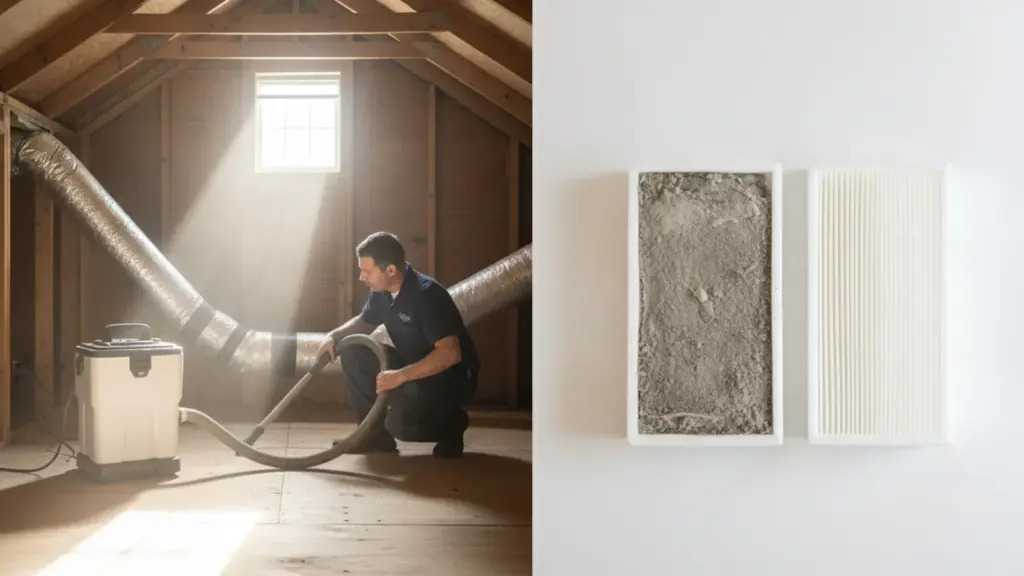
What Factors Determine AC Duct Cleaning Cost in Tampa Homes
When duct cleaning gets postponed, the consequences quietly compound. Dust accumulates on coil surfaces, airflow weakens, and in Tampa’s persistently humid climate, moisture trapped inside ductwork creates conditions where mold can take hold before a homeowner ever notices a musty smell. By the time the problem is visible, the scope of work, and its cost, has grown considerably. Understanding what drives the price of AC duct cleaning in Tampa before you request a quote puts you in a much better position to evaluate proposals, ask the right questions, and avoid surprises on service day.
Tampa’s subtropical environment adds layers of complexity that homeowners in drier climates simply do not face. High ambient humidity, year-round AC use, aging slab-on-grade construction, and homes with ductwork running through unconditioned attic spaces all influence what a thorough cleaning actually involves. This guide walks through every major pricing factor step by step so you can approach the process with confidence. When you are ready to move forward, our complete air duct cleaning service in Tampa covers all of these variables with a transparent, upfront assessment.
Before You Start: What to Have Ready
- Your home’s square footage (check your property appraiser record if unsure)
- The number of supply and return vents throughout the home
- Approximate age of the home and the current HVAC system
- Any known history of water intrusion, roof leaks, or AC condensate issues
- Whether ductwork is flexible (flex duct), rigid sheet metal, or a combination
- Access points: attic hatch size, crawl space availability, or slab construction details
- Notes on any visible dust at registers, musty odors, or recent allergy concerns in the household
Having these details ready before a technician arrives, or even before you call, helps produce a more accurate estimate and prevents scope changes on the day of service.
Step 1: Understand How Home Size Drives the Base Scope
The single largest driver of AC duct cleaning scope is the total square footage of the conditioned space. Larger homes have more linear feet of ductwork, more supply registers, and more return air grilles, each of which requires individual attention. A small bungalow in Seminole Heights and a sprawling four-bedroom home in New Tampa are fundamentally different jobs even if both have similar contamination levels.
Technicians typically count the number of vents, both supply and return, as a practical proxy for system size. A home with eight vents is a materially shorter job than one with twenty-four. When comparing quotes, verify that each proposal accounts for the same vent count, because a low headline figure sometimes reflects a lower vent count assumption that does not match your actual home.
Step 2: Factor In Duct Material and System Configuration
Not all ductwork is cleaned the same way. Rigid sheet-metal ducts can handle more aggressive negative-pressure vacuuming and rotary brush agitation. Flexible duct, which is extremely common in Tampa homes built from the 1980s onward, requires a gentler approach because the inner liner can tear if handled incorrectly. A system that mixes both materials, which is common after partial renovations or system upgrades, takes longer because the technician must adjust technique mid-job.
Duct configuration also matters. A single-story home with a simple trunk-and-branch layout is more straightforward than a two-story home with multiple air handlers, zone dampers, or a return plenum tucked into a tight attic corner. Each additional air handler in a multi-zone system is essentially a separate subsystem requiring its own cleaning sequence.
Step 3: Assess Duct Access and Location
In Tampa, ductwork most commonly runs through attic spaces, and those attics get hot, sometimes exceeding 140 degrees Fahrenheit during summer afternoons. Working in a confined, high-temperature attic takes more time and more physical effort than cleaning ducts in a conditioned basement or accessible mechanical room. That labor intensity is a legitimate cost factor, not padding.
Homes built on slab foundations, which represent a large share of Tampa’s housing stock, sometimes have ductwork running under the slab or through interior wall cavities. These configurations limit where a technician can introduce the vacuum hose and may require additional access cuts, which add both time and material to the job. If your home has buried or in-slab ducts, ask specifically how the provider handles access before agreeing to a scope of work.
Attic hatch size is a smaller but real factor. A standard pull-down stair provides easy access. A small ceiling cutout that requires a technician to squeeze through with equipment adds meaningful time to every round trip between the attic and the living space.
If you want it handled correctly the first time, consider professional air duct cleaning in Tampa.
Step 4: Evaluate the Level of Contamination Present
Contamination level is where Tampa’s climate most directly affects cleaning scope and complexity. Dust alone, even heavy dust accumulation, is a relatively straightforward cleaning task. The picture changes when moisture has been involved.
Tampa’s average relative humidity hovers above 70 percent for much of the year. When an AC system runs constantly, condensation can form on duct surfaces near supply registers, particularly in homes where duct insulation has degraded or where the system is slightly oversized and short-cycles. That moisture, combined with organic dust particles, creates a substrate where microbial growth can develop. Cleaning a system with visible biological contamination requires additional steps, including HVAC duct sanitizing treatments applied after the mechanical cleaning phase, and that additional process adds to the overall scope.
Our article on recognizing early signs of mold in Tampa ductwork covers what to look for before you schedule a cleaning, which can help you communicate the likely contamination level to a technician in advance.
Other contamination factors that increase scope include:
- Pet dander and hair, which mats onto duct walls and requires additional agitation passes
- Construction debris from a renovation, including drywall dust and insulation fibers
- Pest activity or evidence of nesting material inside ductwork
- Heavily soiled evaporator coils that require coil cleaning as a separate step
Step 5: Account for the Age of the Ductwork
Tampa’s residential construction history means a significant portion of the housing stock dates from the post-war boom through the 1970s. Homes of that era may have original ductwork that is now decades old. Older flex duct degrades over time: the inner liner becomes brittle, the insulation compresses, and connections at branch takeoffs loosen. Cleaning aged ductwork requires more care to avoid causing damage, and the inspection process takes longer because the technician needs to assess structural integrity at each section before applying suction or agitation.
In some cases, an inspection during a cleaning visit reveals sections of ductwork that are beyond the point where cleaning is the right answer. Knowing that possibility in advance, and understanding that selecting a qualified Tampa duct cleaning contractor includes asking how they handle deteriorated sections, helps you prepare for that conversation.
Step 6: Understand What Add-On Services Affect Scope
A base duct cleaning covers the interior surfaces of the supply and return duct system. Several additional services are commonly offered alongside, and each one is a legitimate separate task with its own labor and material requirements.
- Evaporator coil cleaning: The coil sits inside the air handler and is the first surface air contacts after leaving the ductwork. A dirty coil re-contaminates freshly cleaned ducts quickly. Cleaning it during the same visit is efficient but adds time.
- Blower wheel cleaning: The fan wheel inside the air handler accumulates dust on its blades, reducing airflow and efficiency. Accessing and cleaning it typically requires partial disassembly of the air handler cabinet.
- Dryer vent inspection: If your home has not had a recent dryer vent inspection, combining it with an HVAC visit can be efficient. Ecovent specializes in both services, so ask about bundling when you schedule.
- Sanitizing treatment: An EPA-registered sanitizing agent applied to duct interiors after mechanical cleaning addresses residual microbial contamination. In Tampa’s humidity, this step is often worth considering, particularly if moisture history is present.
- Register and grille cleaning: Supply and return covers accumulate significant surface dust. Cleaning them separately from the duct interior is a finishing step that some scopes include and others price separately.
For a fuller picture of what a complete cleaning involves, see our guide to air duct cleaning in Tampa which outlines the full process from inspection through sanitizing.
Many Tampa homeowners rely on expert air duct cleaning in Tampa for exactly this.
Step 7: Recognize the Role of Access Cuts and Repairs
In a straightforward cleaning, the technician accesses the duct system through existing registers and the main trunk or plenum. When ductwork layout does not allow adequate access, a small access cut, typically a few inches of sheet metal or duct board, may be necessary to introduce the vacuum hose at a strategic point. These cuts are sealed afterward with code-compliant materials, but the extra step adds labor and material to the job.
Similarly, if the inspection reveals disconnected duct sections, collapsed flex duct, or unsealed joints that are bypassing conditioned air into the attic, those repairs need to be addressed either before or alongside the cleaning. Cleaning a leaking duct system without sealing the leaks first reduces the effectiveness of the cleaning and wastes conditioned air. Ask any provider whether their scope includes identifying and noting duct defects, even if repair is quoted separately.
Step 8: Compare Quotes on Equal Terms
Once you have collected quotes, the most important step is ensuring you are comparing the same scope. A lower figure that excludes the blower wheel, coil, or sanitizing treatment may represent a smaller job, not a better deal. Ask each provider to itemize what is included and what is not.
Key questions to ask every provider:
- How many vents does your quote cover, and what happens if the actual count differs?
- Is the evaporator coil cleaning included or separate?
- Does your process follow NADCA (National Air Duct Cleaners Association) standards for source removal?
- How do you handle deteriorated flex duct during the cleaning process?
- Is sanitizing included, and if so, what product is used and is it EPA-registered?
- What documentation or photos do you provide after the job?
Our article on what to look for when hiring a duct cleaning company in Tampa covers these questions in more depth and can help you evaluate the answers you receive.
Step 9: Plan for Ongoing Maintenance to Extend Cleaning Intervals
The frequency with which a Tampa home needs duct cleaning depends heavily on how well the system is maintained between professional visits. Homes that change filters on schedule, keep return air grilles clear, and address any moisture issues promptly typically need less frequent deep cleaning than homes where maintenance has been deferred.
After a professional cleaning, a few straightforward habits can extend the time before the next full service is warranted. Our guide on preventing dust from returning after an AC cleaning walks through the specific steps that make the biggest difference in Tampa’s conditions, including filter selection, humidity management, and register maintenance.
Tampa’s year-round cooling season means the AC system runs far more hours annually than systems in northern climates. That continuous operation accelerates dust accumulation on duct surfaces and coils alike, which is worth factoring into how you think about cleaning frequency relative to national averages.
When to Call a Professional in Tampa
Some aspects of evaluating your duct system are appropriate for a homeowner to observe: checking registers for visible dust buildup, noting musty odors when the AC first starts, or observing whether airflow feels weaker at certain vents than others. But the actual inspection of duct interiors, assessment of contamination levels, and any cleaning work requires professional equipment and training.
Ready for the next step? Learn how air duct cleaning services in Tampa can help and reach out to the team.
In Tampa specifically, call a professional when:
- You notice a musty or stale odor that persists after changing the filter, which may indicate biological growth inside the duct system or on the coil
- Visible dust or debris is present at supply registers even shortly after cleaning them
- The home has recently experienced a water intrusion event, roof leak, or significant AC condensate backup
- A renovation has introduced construction dust into the living space
- The system has not been professionally cleaned in three or more years, given Tampa’s high-humidity operating conditions
- You can see daylight through duct connections in the attic, or notice insulation debris inside registers
Never attempt to clean deep inside ductwork, service an air handler, or address mold remediation yourself. These tasks involve equipment, chemicals, and confined-space access that require trained technicians with proper protective gear.
Frequently Asked Questions
Does a larger home always cost more to clean?
Generally yes, because more square footage means more ductwork and more vents, but home size is only one factor. A smaller home with severely contaminated ducts, difficult attic access, or aged flex duct that requires careful handling may involve more labor than a larger home with a clean, accessible system. Vent count and contamination level often matter as much as square footage alone.
Why does Tampa humidity affect duct cleaning scope?
High ambient humidity, combined with year-round AC operation, creates conditions where moisture can accumulate on duct surfaces. That moisture, when mixed with dust particles, can support microbial growth that requires additional sanitizing steps beyond standard mechanical cleaning. Homes in Tampa often benefit from an HVAC duct sanitizing treatment as part of the cleaning process for this reason.
Is evaporator coil cleaning always necessary alongside duct cleaning?
Not always required, but often advisable. The evaporator coil is the first surface air contacts after passing through the duct system. A heavily soiled coil can re-contaminate freshly cleaned ducts relatively quickly. A technician should inspect the coil during the visit and advise whether cleaning it during the same appointment makes sense for your system’s condition.
What does NADCA source removal mean, and why does it matter?
NADCA’s source removal standard requires that contaminants be physically removed from the duct system rather than simply disturbed or coated over. It typically involves high-powered negative air pressure combined with mechanical agitation (brushes or compressed air whips) to dislodge debris and capture it in a collection device. This approach is more thorough than surface-only methods and is the benchmark a quality provider should meet.
How soon after cleaning will I notice a difference in air quality?
Many Tampa homeowners notice that the air feels fresher and that dust settles less quickly on surfaces within the first week after a thorough cleaning. The degree of improvement depends on how contaminated the system was before cleaning and whether the coil and blower were also addressed. Maintaining a clean filter and managing indoor humidity consistently after the service helps sustain those results.
Making an Informed Decision on AC Duct Cleaning in Tampa
Pricing for AC duct cleaning in Tampa reflects a real combination of variables: how large and complex your system is, how accessible the ductwork is, what contamination is present, and what additional components need attention alongside the ducts themselves. A quote that accounts for all of these factors honestly is a better starting point than a low number that excludes half the job.
Tampa’s climate means indoor air quality challenges are ongoing rather than occasional. Understanding the cost drivers helps you plan for maintenance proactively rather than reactively, and it helps you recognize when a proposal is thorough versus when it is leaving important work out of scope.
When you are ready to get a clear picture of what your home’s system actually needs, our professional air duct cleaning service for Tampa homeowners starts with a full inspection so there are no surprises. Contact Ecovent Dryer Duct Solutions to schedule your assessment and get a scope-specific quote for your home.