
7 Signs Your Tampa Home Needs HVAC Duct Cleaning
How do you actually know when your air ducts need cleaning? The honest answer: your Tampa home will tell you, if you know what to look for. Gulf Coast humidity, year-round AC use, and the region’s sandy soils create conditions that accelerate buildup inside residential ductwork faster than in drier climates. This list covers the seven clearest warning signs, each one rooted in the realities of living in the Tampa Bay area.
1. Visible Dust Blowing from Supply Vents
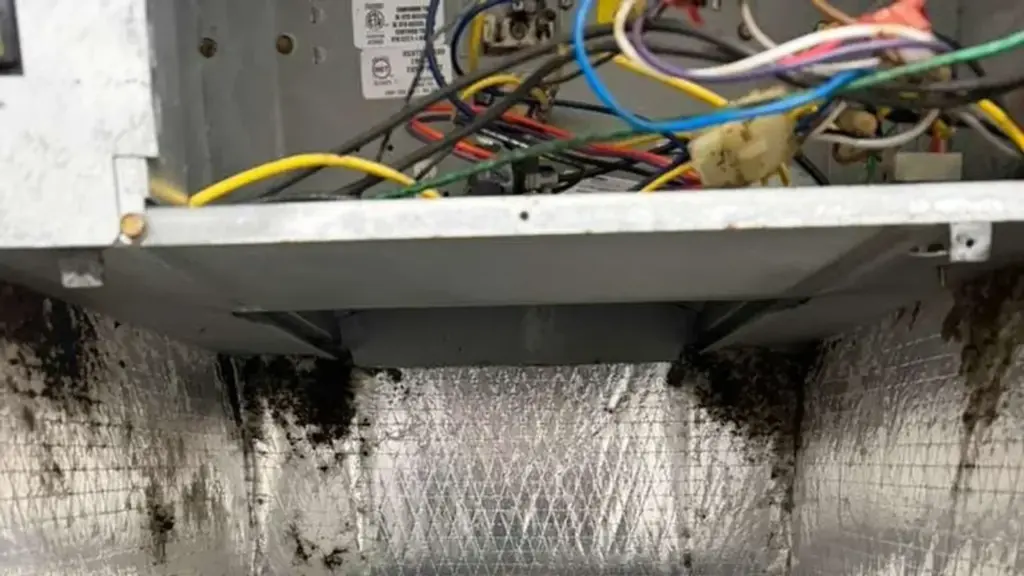
When you hold your hand near a supply vent and feel gritty particles, or watch a puff of dust drift into the room the moment the air handler kicks on, the ductwork is almost certainly overdue for a cleaning. A thin film of settled debris on the vent grille itself is normal between routine maintenance visits, but actively airborne particles blowing into living spaces indicate a more significant accumulation inside the system. In Tampa homes, this is often a mix of fine Florida sand, drywall particles from construction or renovation work, and shed skin cells that have compacted into a loose, mobile layer inside the supply trunk lines. That layer gets disturbed every time the blower starts. If wiping a vent grille with a white cloth leaves a noticeably gray residue after just a few days, that is a reliable indicator that the ducts themselves need attention. For more on what drives this buildup in Gulf Coast conditions, see why Tampa’s humidity accelerates duct debris.
2. Musty or Stale Odors When the AC Runs
A musty smell that appears specifically when the air conditioner or heat pump turns on, and fades when the system is off, is one of the more telling signs that something is growing or decomposing inside the duct system. In Tampa’s subtropical climate, the combination of warm air, high relative humidity, and the cool interior surfaces of ductwork creates an environment where organic material can take hold. The odor itself does not always indicate a serious mold problem, but it does indicate that biological debris, whether dead insect matter, accumulated organic dust, or early-stage microbial growth, has reached a level where the airstream is picking it up and circulating it through the home. A thorough cleaning addresses the source rather than masking it with air fresheners or filters alone. If the odor persists after cleaning, that is a signal to have the system inspected more closely for moisture intrusion at joints or in the air handler itself.
3. Noticeably Uneven Airflow Between Rooms
If one bedroom feels significantly cooler than the living room, or a particular zone of the house never seems to reach the thermostat setpoint, restricted airflow is a common cause. Debris accumulation inside ductwork can narrow the effective diameter of a run, reducing the volume of conditioned air that reaches the farthest registers. This is especially common in longer duct runs and in flex duct sections that may have sagged over time, creating low spots where dust and debris settle. Before assuming the issue is a refrigerant problem or an undersized system, it is worth ruling out duct obstruction. Homeowners often notice the imbalance first during Tampa’s hottest months, when the system is running at its longest duty cycles and any restriction becomes more apparent. Our complete Tampa air duct cleaning guide covers how a professional inspection distinguishes airflow restriction from other HVAC performance issues.
If you want it handled correctly the first time, consider professional air duct cleaning in Tampa.
4. A Spike in Energy Bills Without a Change in Usage
Tampa residents run their air conditioning for a large portion of the year, so energy costs are already a meaningful household expense. When those costs climb noticeably without a corresponding change in thermostat settings, occupancy, or utility rates, reduced system efficiency is worth investigating. Heavily soiled ductwork forces the air handler to work harder to push conditioned air through restricted passages, which increases runtime and energy consumption. The same effect occurs when debris accumulates on the evaporator coil, though that is a separate but related maintenance issue. If your most recent utility bills are trending upward and you cannot attribute the change to rate increases or unusual weather, scheduling a duct inspection is a practical diagnostic step. For a broader look at what influences the overall scope and cost of a cleaning service, understanding Tampa duct cleaning cost factors provides useful context before you call for a quote.
5. Tampa’s Humidity Has Triggered Visible Condensation on or Near Vents
This sign is specific to the Gulf Coast climate and deserves its own item. Tampa’s average relative humidity regularly exceeds 70 percent during summer months, and the temperature differential between the cold air inside supply ducts and the warm, moisture-laden air in an unconditioned attic or crawl space creates conditions for condensation. When you see water droplets forming on vent grilles, or notice discoloration (often a gray or brownish ring) on the ceiling drywall around a supply register, that is evidence of a moisture problem at or near the duct. Left unaddressed, condensation at vent penetrations can introduce moisture into the duct interior, where it combines with settled dust to create a damp substrate. This is one of the more urgent scenarios because it compounds over time. If you notice this pattern in your Tampa home, a duct cleaning combined with an inspection of the insulation and vapor barrier on those runs is the appropriate response. Duct systems in older Tampa-area homes, particularly those built before the widespread adoption of mastic-sealed flex duct, are especially susceptible to this issue.
6. Increased Household Dust Despite Regular Cleaning
Every home accumulates dust, but there is a noticeable difference between normal household dust and a situation where surfaces seem to re-coat themselves within a day or two of being wiped down. When the duct system is heavily loaded with debris, the blower effectively becomes a redistribution mechanism, pulling particulates from inside the system and depositing them throughout the living space with each cycle. Homeowners often describe this as a frustrating cycle where cleaning feels pointless. Bookshelves, ceiling fan blades, and horizontal surfaces near supply vents tend to accumulate the heaviest deposits. Changing the air filter more frequently can reduce some of this, but if the buildup inside the ducts is significant, filter upgrades alone will not resolve the root cause. A professional cleaning removes the source material rather than just managing the output. After service, most homeowners notice that routine dusting becomes less frequent and less intensive.
7. Recent Renovation, Construction, or a Pest Intrusion
Many Tampa homeowners rely on expert air duct cleaning in Tampa for exactly this.
Any significant work inside a Tampa home, a kitchen remodel, bathroom renovation, flooring replacement, or even a drywall repair, generates fine particulate debris that the HVAC system can pull into the return air pathway. Contractors typically seal vents during active work, but particles still find their way into the system through gaps, open returns, and the air handler itself. After a renovation project of any meaningful scale, scheduling a duct cleaning is a straightforward way to remove construction debris before it circulates through the home. Similarly, if a pest inspection or exterminator visit has confirmed rodent or insect activity in the ductwork, cleaning after treatment removes biological debris and any nesting material that could otherwise remain in the system. Tampa’s warm climate makes year-round pest pressure a reality for many homeowners, and duct intrusions are more common than many residents realize. If you are unsure whether your system warrants cleaning after a recent project, questions to ask during a Tampa ductwork inspection can help you frame the right conversation with a technician.
Frequently Asked Questions
How often should Tampa homeowners schedule air duct cleaning?
There is no single interval that applies to every home. Variables like household size, the presence of pets, whether anyone in the home has respiratory sensitivities, and the age of the duct system all influence how quickly debris accumulates. Many Tampa homeowners with standard single-family homes find that a cleaning every three to five years is appropriate, while homes with pets, recent renovations, or older flex duct systems may benefit from more frequent attention. A visual inspection of the return grille and a few supply registers is a practical starting point for gauging where your system stands.
Can I check my own ducts before calling a professional?
A basic visual check is straightforward and safe. Remove a supply or return grille, shine a flashlight into the duct opening, and look at the inner surfaces. A light coating of dust is normal; thick, compacted debris, visible biological growth, or any sign of moisture and discoloration warrants a professional evaluation. Avoid reaching into the ductwork or disturbing debris, as doing so can release particulates into the air and potentially damage flex duct liners.
Does cleaning the ducts also address the evaporator coil and air handler?
Duct cleaning and air handler or coil cleaning are related but separate services. A thorough duct cleaning addresses the supply and return duct network, the main trunk lines, and typically the registers and grilles. The evaporator coil, blower wheel, and drain pan are components of the air handler itself and are usually serviced separately as part of an HVAC tune-up or coil cleaning appointment. When scheduling service, it is worth asking specifically which components are included so you have a clear picture of the scope.
Recognizing these signs early gives Tampa homeowners the opportunity to address duct issues before they affect system performance or household comfort. If two or more of the situations above sound familiar, it is a reasonable time to schedule a professional evaluation. Our residential duct cleaning guide for Tampa walks through what a professional cleaning involves from start to finish, so you know exactly what to expect. To take the next step, schedule a duct cleaning assessment with our Tampa team and get a clear picture of what your system actually needs.