What to Ask a Tampa Duct Cleaning Company Before You Hire One
Most homeowners assume all duct cleaning services are basically the same, show up, run a vacuum, collect a check. The reality in Tampa is quite different. The combination of near-year-round AC use, high humidity, and aging ductwork in many local neighborhoods means the gap between a thorough cleaning and a surface-level one is wider here than in most U.S. cities. Asking the right questions before you hire separates providers who follow an industry-standard process from those who don’t, and it protects you from paying for work that leaves your system no better than before.
This guide walks through the specific questions worth asking, explains what a strong answer looks like versus a weak one, and helps you compare two common approaches Tampa homeowners encounter: the full-system negative-pressure method versus portable or “truck-mount lite” setups. If you’re still weighing whether your home even needs service, check the warning signs first before going further.
Why Vetting Matters More in Tampa Than in Most Cities
Tampa’s climate creates conditions that make duct cleaning both more necessary and more technically demanding than in drier parts of the country. Relative humidity regularly sits above 70 percent for months at a stretch, and AC systems run almost continuously from late spring through early fall. That continuous runtime means supply and return ducts accumulate particulate faster, and the moisture cycling through the system creates an environment where biological growth can take hold inside ductwork more readily than in a dry climate.
Many Tampa homes built before the 1990s also have original flex duct or early fiberglass board ductwork that degrades over time. Aggressive cleaning techniques that work fine on sheet metal can shred older flex duct lining if the technician doesn’t adjust their approach. A provider unfamiliar with Tampa’s housing stock may not account for this. Asking about experience with local construction types is not a throwaway question, it’s a practical safeguard.
For a broader picture of what proper service should look like, the complete Tampa air duct cleaning guide covers the full scope of what a residential cleaning involves from start to finish.
Option 1: Full-System Negative-Pressure Cleaning
The method most closely aligned with NADCA (National Air Duct Cleaners Association) standards involves placing the entire duct system under negative pressure using a high-powered vacuum collection unit, then agitating debris inside the ducts with brushes, air whips, or compressed air tools so it travels toward the vacuum rather than back into the living space.
This approach requires equipment capable of generating significant airflow, and the vacuum collection unit is typically large enough that it either stays outside the home (truck-mounted) or is a substantial portable unit brought in through a door or garage. The technician seals registers and works section by section, ensuring debris is captured rather than redistributed.
Strengths of this method for Tampa homes include its ability to address the full duct run rather than just accessible registers, and its effectiveness at removing the fine particulate that accumulates in systems running as hard as Tampa AC units do. It also allows the technician to inspect the interior duct surface and identify areas of concern, such as deteriorating flex duct or signs of moisture intrusion, that a less thorough approach would miss.
The honest limitation is that it takes longer and requires more equipment staging, which affects scheduling. For homes with complex duct layouts or multiple air handlers, the process can take several hours.
Option 2: Portable or Register-Only Cleaning
Some providers use smaller portable vacuums and focus primarily on cleaning at the register level, sometimes combined with a fogging or sanitizing step. This approach is faster and requires less equipment, which is part of why it tends to be offered at a lower price point.
For lightly soiled systems in newer homes with well-sealed ductwork, a register-focused cleaning may be adequate maintenance. The concern arises when this method is marketed as equivalent to a full-system cleaning without the homeowner understanding the difference. Debris sitting in the main trunk lines or deep in branch runs is not addressed by cleaning only at the register face.
In Tampa’s climate, where duct systems accumulate particulate quickly due to near-continuous operation, a register-only approach may provide cosmetic improvement without meaningfully improving the condition of the system as a whole. It’s worth asking any provider exactly how far into the duct system their cleaning process reaches and what equipment they use to verify it.
Comparison: Full-System vs. Register-Level Cleaning
If you want it handled correctly the first time, consider professional air duct cleaning in Tampa.
| Criterion | Full-System Negative-Pressure | Register-Level / Portable |
|---|---|---|
| Depth of cleaning | Entire duct run, trunk lines, and branches | Primarily register faces and short accessible sections |
| Equipment required | High-capacity vacuum unit (truck-mount or large portable), agitation tools | Smaller portable vacuum, brushes, optional fogger |
| NADCA process alignment | Closely aligned with source removal standards | Partial; depends heavily on technician technique |
| Interior duct inspection | Possible during the process; technician can identify damage | Limited; deep sections not visually accessed |
| Suitability for older Tampa ductwork | Good when technician adjusts agitation for flex duct | Lower risk of mechanical damage, but less thorough |
| Time on-site | Longer (typically multiple hours for a full home) | Shorter; faster turnaround |
The Questions to Ask Before You Book
Armed with the comparison above, here are the specific questions that help you evaluate any Tampa provider before committing.
1. What equipment do you use, and how does it create negative pressure in the system?
A provider doing full-system work should be able to describe their vacuum unit’s capacity and explain how they seal the system during cleaning. Vague answers like “we use professional equipment” without specifics are worth following up on. Ask whether the vacuum unit is truck-mounted or portable, and what CFM (cubic feet per minute) rating it operates at.
2. Do you follow NADCA standards?
NADCA’s Assessment, Cleaning, and Restoration (ACR) standard is the closest thing the industry has to a universal benchmark for residential duct cleaning. A provider familiar with it will recognize the acronym and be able to describe how their process aligns with source removal methodology. This doesn’t mean only NADCA-certified companies do good work, but familiarity with the standard is a reasonable signal of professional knowledge.
3. How do you handle older flex duct or fiberglass board duct?
This is a Tampa-specific question that separates technicians with local experience from those who apply a one-size-fits-all approach. Flex duct with degraded inner lining can be damaged by aggressive rotary brushing. A knowledgeable technician will adjust their agitation method based on what they find, and they should be able to explain how.
4. Will you inspect the duct interior, and what happens if you find damage?
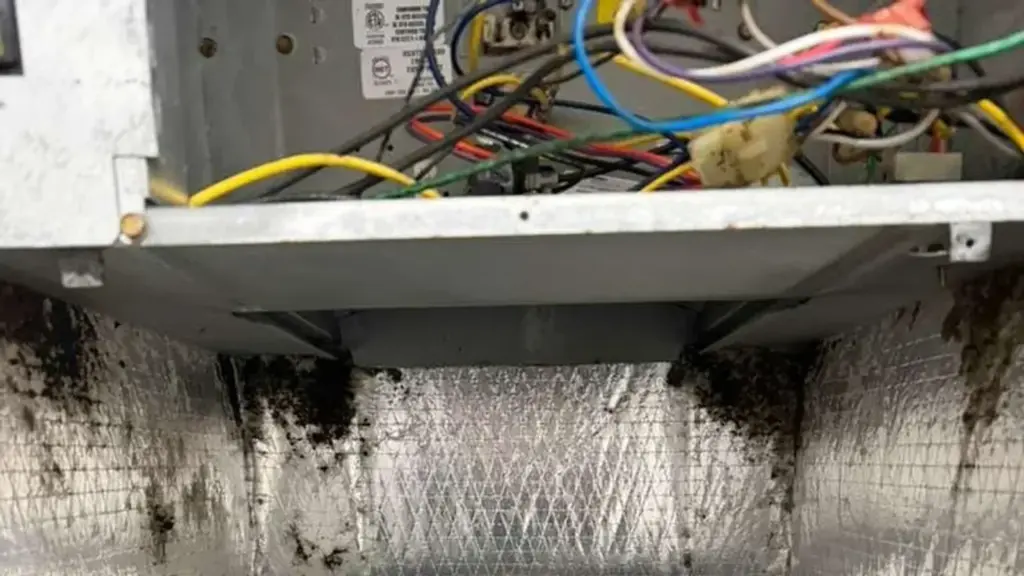
A thorough cleaning process gives the technician visibility into the duct interior. Ask whether they use a camera or visual inspection during the job, and what they do if they find a section of duct that’s deteriorated, disconnected, or showing signs of moisture intrusion. A provider who can walk you through a clear process for flagging and addressing those findings is more trustworthy than one who says they’ll just clean and move on. For context on what duct deterioration looks like in Tampa homes, this overview of warning signs covers the most common indicators.
5. What does the cleaning include, and what is explicitly not included?
Get clarity on whether the service covers supply ducts only or also return ducts, the air handler cabinet, the blower compartment, and the evaporator coil area. Some providers include all of these; others quote for supply registers only and add the rest as line items. Knowing exactly what’s covered prevents surprises when the invoice arrives. For a deeper look at what drives the scope and complexity of a job, the breakdown of Tampa duct cleaning cost factors explains the variables well.
6. Do you carry liability insurance and workers’ compensation?
Any contractor working in your home should carry both. Ask for proof, not just a verbal confirmation. This protects you if equipment damages your property or a technician is injured on-site.
7. Will you provide a written scope of work before starting?
A reputable provider should be willing to put the scope in writing before the job begins, including what will be cleaned, what equipment will be used, and what the process looks like. This gives you a reference point if the work doesn’t match what was described.
Red Flags Worth Knowing
A few patterns are worth watching for when evaluating Tampa duct cleaning companies, not to disparage any particular provider, but because they signal a mismatch between what’s being sold and what’s being delivered.
Unusually fast job estimates for large homes are worth questioning. A thorough full-system cleaning of a 2,000-square-foot Tampa home with multiple zones takes time. If a quote assumes the job will be done in under an hour, ask how that’s possible given the scope.
Pressure to add chemical sanitizing or “antimicrobial treatments” as a default upsell, without first establishing whether there’s a specific reason for it, is another pattern to note. Sanitizing products may have a legitimate role in certain situations, but they shouldn’t be the centerpiece of a cleaning proposal before any inspection has taken place.
Finally, be cautious of quotes given entirely over the phone without any questions about your home’s square footage, duct configuration, number of registers, or system age. A provider who can give a firm quote without knowing those details either hasn’t thought through the job or is quoting a very limited scope.
Many Tampa homeowners rely on expert air duct cleaning in Tampa for exactly this.
Which Approach Is Right for Tampa Homes?
For most Tampa homeowners, particularly those in homes built before 2000, in neighborhoods with older housing stock like Seminole Heights, Carrollwood, or South Tampa, or in homes where the AC system runs heavily from April through October, the full-system negative-pressure approach is the more appropriate choice. The volume of particulate that accumulates in a system running that many hours per year, combined with Tampa’s humidity, makes a thorough cleaning more valuable than a quick register-level pass.
Newer construction with well-sealed, properly installed ductwork and a documented maintenance history may be adequately served by a less intensive approach, but even then, asking the questions above will help you confirm what you’re actually getting.
After a cleaning, keeping the system in good shape is largely about consistent filter maintenance and periodic checks. Maintaining clean ducts between service visits is a practical next step once the initial cleaning is done.
If you want a professional assessment of your Tampa home’s duct system before deciding on a service approach, our air duct cleaning service page explains how we approach residential jobs and what the process looks like from inspection through completion. You can also reach us directly to ask the same questions outlined here before booking anything.
Frequently Asked Questions
How do I know if a Tampa duct cleaning company is using the right equipment?
Ask specifically about their vacuum unit’s capacity, whether it’s truck-mounted or a large portable unit, and how they create negative pressure in the duct system during cleaning. A technician doing full-system work should be able to explain the process clearly. If the answer is vague or they can’t describe the negative-pressure step, that’s worth probing further.
Is NADCA certification required for duct cleaners in Tampa?
There is no Florida state law requiring NADCA certification for duct cleaning companies, though requirements can vary and it’s worth checking current local regulations. NADCA certification is a voluntary industry credential that signals familiarity with source removal standards, so it’s a useful data point when comparing providers, but the absence of certification doesn’t automatically disqualify a company.
Should I get a duct inspection before scheduling a cleaning?
For older Tampa homes or systems that haven’t been serviced in several years, a pre-cleaning inspection is a reasonable step. It can identify deteriorated flex duct, disconnected sections, or moisture-related issues that would affect how the cleaning should be approached, and it helps you understand the actual condition of your system before committing to a service.
How long should a full residential duct cleaning take in a typical Tampa home?
A thorough full-system cleaning for a single-story home in the 1,500 to 2,500 square foot range typically takes several hours when done properly. Larger homes, two-story layouts, or homes with multiple air handlers will take longer. A job quoted at under an hour for a full home is worth questioning in terms of what’s actually being cleaned.
What should be included in a duct cleaning quote?
A complete quote should specify whether supply and return ducts are both included, whether the air handler cabinet and blower compartment are part of the scope, and what agitation and vacuum methods will be used. Any add-on services like sanitizing treatments should be itemized separately so you can evaluate them independently. Always ask for the scope in writing before work begins.
How often do Tampa homes typically need duct cleaning?
Because Tampa AC systems run far more hours per year than systems in cooler climates, ductwork tends to accumulate particulate faster. Many local homeowners find that service every three to five years is appropriate, though homes with pets, recent renovations, or older duct materials may benefit from more frequent attention. The signs your Tampa home needs duct cleaning can help you gauge whether it’s time regardless of when the last service was done.
The Bottom Line
Choosing a duct cleaning company in Tampa comes down to asking specific, process-oriented questions and evaluating whether the answers reflect genuine knowledge of the work involved. The comparison between full-system and register-level approaches isn’t about one being universally better in all situations. It’s about matching the method to your home’s actual condition, and making sure you know which one you’re paying for before the job starts.
If you’d like to speak with someone at Ecovent Dryer Duct Solutions about your Tampa home’s duct system, reach out through our professional air duct cleaning service page. We’re straightforward about our process, our equipment, and what a cleaning actually involves for homes in this area.