
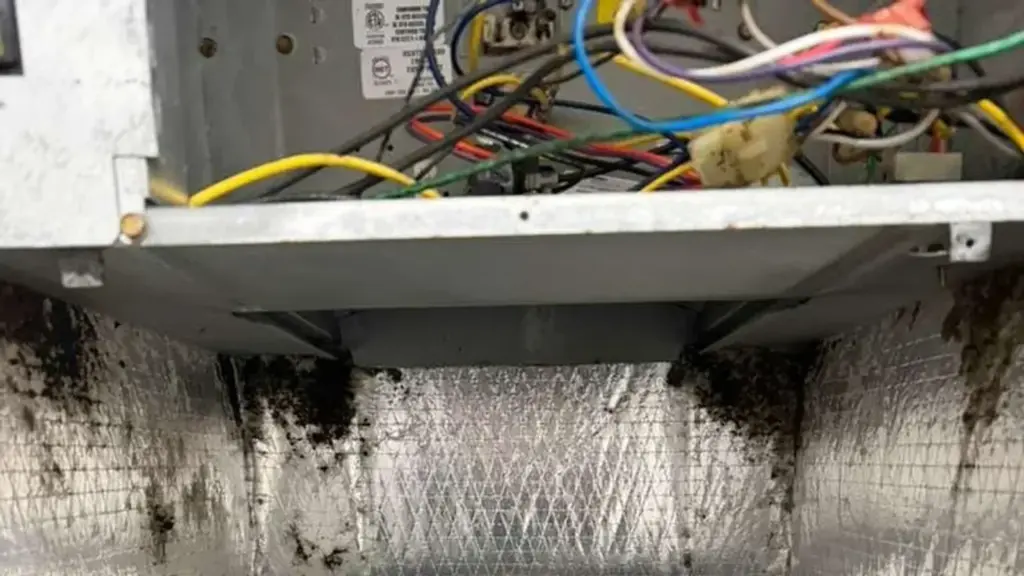
Air Duct Cleaning in Tampa: A Complete Guide to Indoor Air Quality
You flip on the AC, and within seconds a faint musty smell drifts through the vents. It is not overwhelming, but it is there, and it has been there every summer. Tampa homeowners know that smell. With the Gulf humidity pressing against the windows from May through October, your HVAC system runs almost continuously, and the ductwork behind your walls quietly collects everything the air carries: dust, pollen, mold spores, and pet dander. This guide covers what you need to know about residential air duct cleaning in Tampa, from why the local climate makes it a bigger concern than in drier parts of the country to what a professional cleaning actually involves.
Why Tampa’s Climate Makes Duct Cleaning a Distinct Priority
Tampa sits in one of the most humid subtropical climates in the continental United States. Relative humidity regularly exceeds 80 percent during summer months, and even mild winters rarely let ductwork dry out completely between cooling seasons. This matters for a straightforward reason: moisture inside a duct system creates conditions where organic material, including the dust and debris that accumulates naturally, can support mold and mildew growth.
Unlike homes in the Southwest or the upper Midwest, Tampa homes run their air conditioning systems for eight to ten months a year. That continuous operation means the blower fan is constantly drawing air, and every particle that slips past a worn filter or gaps in the return-air plenum ends up somewhere inside the duct network. Older neighborhoods like Seminole Heights, Palma Ceia, and South Tampa often feature homes built in the 1950s through 1980s with original or partially updated ductwork. Flex duct installed in those eras can develop interior liner deterioration that makes surfaces rougher and more likely to trap debris over time.
The combination of near-constant system runtime, high ambient moisture, and aging duct materials puts Tampa households in a category where periodic professional cleaning is a practical maintenance step, not a luxury. If you want to understand how humidity specifically accelerates buildup, this breakdown of humidity and dusty ducts explains the mechanics in detail.
What Accumulates Inside Tampa Ductwork
A cross-section of debris pulled from a typical Tampa home’s ducts during a professional cleaning often includes:
- Dust and skin cells shed by occupants and pets, which form the bulk of the visible buildup.
- Pollen from Tampa’s year-round growing season, including oak, pine, and grass varieties that peak at different times.
- Pet dander, which is lighter than dust and travels further into the duct system before settling.
- Mold spores and mildew, particularly near supply registers and at flex duct joints where condensation can form.
- Construction debris in homes that have undergone renovation, including drywall dust and insulation fibers that entered open duct sections.
- Insect and rodent debris, which is more common than many homeowners expect in Florida’s warm climate.
None of these contaminants are unique to Tampa, but the subtropical environment accelerates how quickly they accumulate and how hospitable the duct interior becomes to biological growth. Knowing what is actually inside your system is one reason a pre-cleaning duct inspection is worth scheduling before committing to a service plan.
Signs Your Tampa Home’s Ducts Need Attention
Ductwork does not send obvious alerts when it needs cleaning. The signals are subtler, and they often get attributed to other causes. Watch for these patterns:
- Visible dust settling on registers and return-air grilles within days of cleaning them.
- A musty or stale odor that appears when the air handler first starts up, then fades.
- Uneven airflow between rooms, with some areas feeling noticeably warmer or cooler than others.
- An increase in household dust on furniture surfaces despite regular cleaning.
- Allergy or respiratory irritation that seems worse indoors than outside, particularly during high-pollen seasons.
- A higher-than-expected energy bill, which can indicate the system is working harder to push air through partially obstructed ducts.
If you want it handled correctly the first time, consider professional air duct cleaning in Tampa.
Several of these signs overlap with other HVAC issues, so it is worth reading the full rundown of signs a Tampa home needs duct cleaning to help distinguish duct-related problems from filter or equipment issues.
What a Professional Air Duct Cleaning Involves
Understanding the process helps you evaluate whether a service quote reflects real work or a superficial pass. A thorough residential cleaning follows a structured sequence:
- Pre-service inspection. A technician visually inspects accessible duct sections, the air handler, and the blower compartment. Camera inspection of main trunk lines gives a clearer picture of actual buildup and any physical damage to the duct interior.
- System isolation and negative pressure setup. A high-powered vacuum unit, typically truck-mounted for maximum suction, connects to the main trunk line and places the entire duct system under negative pressure. This prevents dislodged debris from escaping into living spaces during cleaning.
- Agitation of duct surfaces. Technicians use rotating brush tools and compressed-air whips to break loose debris from duct walls, working from the farthest supply registers back toward the main collection point. Each register is cleaned individually.
- Return-air side cleaning. Return ducts, the air handler cabinet, and the blower wheel receive the same treatment. Skipping the return side leaves the system half-cleaned.
- Register and grille cleaning. Supply and return covers are removed, cleaned, and reinstalled.
- Post-service verification. A final inspection confirms debris has been collected and airflow is restored. Any concerns about duct condition, such as gaps, disconnected sections, or liner deterioration, are noted for the homeowner.
This process aligns with the standards published by NADCA (the National Air Duct Cleaners Association), which define source removal as the accepted method for residential duct cleaning. A service that only blows air through the ducts without negative pressure collection does not meet that standard.
How Often Should Tampa Homeowners Schedule Cleaning?
General guidance from NADCA suggests every three to five years for most households, but that range assumes average conditions. Several Tampa-specific factors push toward the shorter end of that window:
| Household Condition | Suggested Interval |
|---|---|
| No pets, no smokers, newer home with tight construction | Every 4-5 years |
| One or two pets, average Tampa humidity exposure | Every 3-4 years |
| Multiple pets or heavy shedding breeds | Every 2-3 years |
| Recent renovation with open duct sections | After project completion |
| Visible mold in or near supply registers | Promptly, regardless of last service |
| Home unoccupied for extended period (seasonal residence) | Before reoccupying |
Tampa’s seasonal rental market and the number of snowbird properties in the area create a specific scenario worth noting: a home that sits closed up with the AC set high during summer can develop significant mold growth inside ductwork if the system is not running consistently enough to manage humidity. Coming home to that situation is exactly when scheduling a cleaning before settling back in makes sense.
For ongoing maintenance between professional cleanings, these practical habits for keeping Tampa ducts cleaner longer can reduce how quickly buildup returns.
What Affects the Cost of Duct Cleaning in Tampa
Many Tampa homeowners rely on expert air duct cleaning in Tampa for exactly this.
Pricing for ac duct cleaning varies, and understanding the drivers helps you compare quotes fairly without anchoring to a number that may not reflect your home’s actual scope.
The primary factors that influence what you will pay include:
- Home size and number of vents. Larger homes with more supply and return registers take longer and require more equipment setup time.
- Duct configuration. Homes with complex layouts, multiple air handlers (common in two-story Tampa homes), or hard-to-access crawl-space ductwork require more labor.
- Degree of contamination. Heavy buildup, visible mold, or pest debris adds time and may require additional steps beyond standard cleaning.
- Access conditions. Attic ductwork in Tampa’s extreme summer heat creates challenging working conditions that factor into service logistics.
- Add-on services. Dryer vent cleaning, coil cleaning, or sanitizing treatments are often available as additions and affect the total.
A detailed look at how these variables interact is available in this guide to duct cleaning cost factors in Tampa, which walks through each driver so you can evaluate quotes with a clear frame of reference.
Duct Cleaning vs. Duct Replacement: Knowing the Difference
Not every duct problem is solved by cleaning. Tampa homes, particularly those built before 1990, sometimes have ductwork that has deteriorated to the point where cleaning extends the life of a system that should be replaced. Recognizing the distinction saves money and avoids putting good service dollars into a failing infrastructure.
Cleaning is the right call when:
- The duct material is structurally sound, with no significant tears, disconnected sections, or collapsed flex duct.
- The buildup is biological or particulate in nature rather than a symptom of physical deterioration.
- The system is relatively modern (within the last 15-20 years) and has been reasonably maintained.
Replacement becomes the conversation when:
- Inspection reveals sections that are crushed, disconnected, or leaking conditioned air into unconditioned attic space.
- Original duct material has degraded to the point where interior surfaces are shedding fibers.
- The system layout is inefficient and a redesign would meaningfully improve comfort and energy performance.
Ready for the next step? Learn how air duct cleaning services in Tampa can help and reach out to the team.
This is a decision worth making with a professional who has actually looked inside your system, not based on age alone. Our complete air duct cleaning service page outlines what we assess during an inspection and how we approach the cleaning-versus-replacement conversation with Tampa homeowners.
Frequently Asked Questions
How long does a residential air duct cleaning take in Tampa?
Most single-story Tampa homes with one air handler take between two and four hours. Two-story homes or properties with multiple air handlers typically run three to five hours. Heavier contamination or difficult attic access can extend that window, which is why a pre-service inspection helps set accurate expectations before the crew arrives.
Will duct cleaning make my home smell better?
Homeowners frequently notice that the musty or stale odor that appears when the AC first kicks on is significantly reduced after a thorough cleaning. The smell typically comes from organic material inside the duct system being disturbed by airflow. Removing that material addresses the source rather than masking the symptom. Results vary depending on whether the odor source is in the ducts or elsewhere in the HVAC system.
Is it safe to stay home during the cleaning?
Yes. Because the system is placed under negative pressure during cleaning, dislodged debris is drawn toward the collection unit rather than into your living space. Many Tampa homeowners are home throughout the service. Technicians will need access to the air handler and each register location, so keeping pets and children clear of the work areas is practical.
Do I need to do anything to prepare before the technicians arrive?
Clear a path to the air handler location, which in most Tampa homes means access to the attic or a utility closet. Make sure all supply and return registers are accessible and not blocked by furniture. Replacing your air filter before the service is not necessary, as the technician will typically check it as part of the process. Having a fresh filter on hand for post-service installation is a good idea.
Can duct cleaning help with high energy bills?
Partially obstructed ducts make your air handler work harder to maintain setpoint temperatures, which can show up as higher energy consumption. Cleaning that restores proper airflow may contribute to improved system efficiency. That said, duct cleaning is one factor among several, including equipment age, refrigerant charge, insulation, and duct leakage. A technician who identifies airflow issues during cleaning can help you understand whether other factors are also at play.
What is the difference between duct cleaning and dryer vent cleaning?
They are separate services that address different systems. Air duct cleaning covers the HVAC distribution network that conditions your living spaces. Dryer vent cleaning addresses the exhaust duct that carries heat and lint from your clothes dryer to the exterior of the home. Both are offered as part of our Tampa services, and many homeowners choose to schedule them together for efficiency.
Ready to Schedule Your Tampa Duct Cleaning?
Clean ductwork is not something you see, but Tampa homeowners often notice the difference in how the air feels, how consistently rooms reach temperature, and how quickly dust settles back on surfaces after a thorough cleaning. If it has been several years since your last service, or if you have never had the system professionally cleaned, the ductwork in your home has been working quietly in the background through hundreds of humid Florida summers and winters.
Our team serves Tampa and the surrounding areas with residential hvac duct cleaning built around the NADCA source-removal standard. We bring truck-mounted vacuum equipment, camera inspection capability, and a straightforward process from initial assessment through post-service verification. Contact us to schedule an inspection or get a quote specific to your home’s layout and condition. There is no obligation, and knowing what is actually inside your ducts is a reasonable place to start.