
Common Myths About Damaged Ductwork Symptoms in Tampa Homes
Flexible ductwork installed in a Tampa attic can reach internal temperatures above 130°F on a summer afternoon, even when the AC is running. That single fact reshapes every assumption homeowners bring to the question of duct health, yet misinformation about what causes deterioration, what the warning signs mean, and when action is actually needed remains widespread across the Tampa Bay area. The region’s combination of extreme heat, near-constant humidity, and aging housing stock creates conditions that accelerate duct wear in ways that don’t apply in drier, cooler climates, which is exactly why generic national advice so often leads local homeowners astray. This article works through the most persistent myths, replaces them with grounded explanations, and helps you understand what your ducts are actually telling you.
Myth: Ductwork Lasts as Long as the AC System Itself
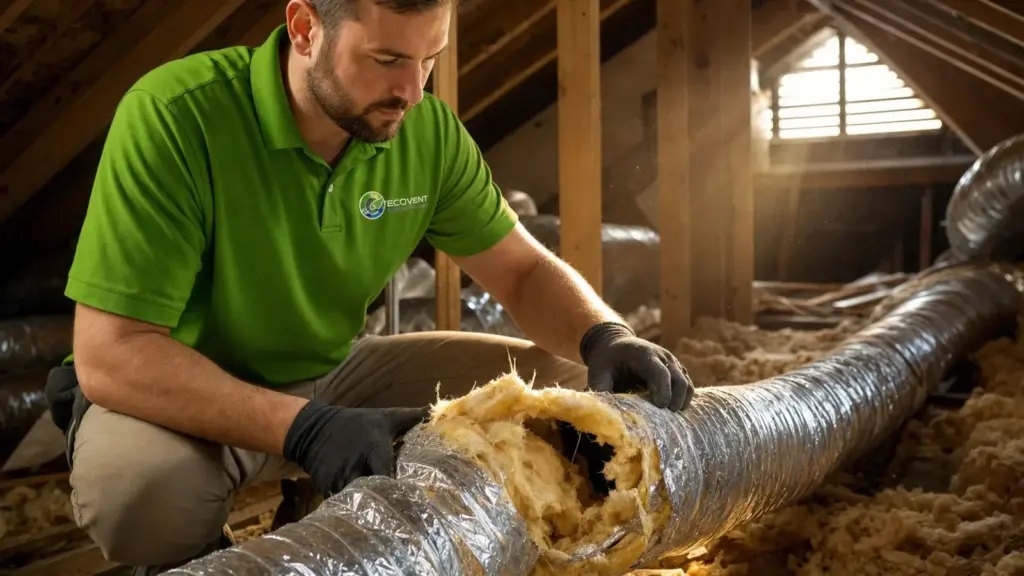
Reality: The lifespan of ductwork and the lifespan of an air handler or condenser are not the same clock. In Tampa’s climate, flexible duct materials, particularly the inner liner and the outer insulation jacket, are exposed to conditions that degrade them independently of how well the mechanical equipment is performing. Attic temperatures in Hillsborough and Pinellas counties regularly exceed outdoor ambient temperatures by 30 to 40 degrees during summer months. That sustained thermal stress causes the plastic liner of flex duct to become brittle, the foil facing to crack, and the fiberglass batt insulation to compress and lose its R-value. A homeowner who replaces a 15-year-old air handler with a new high-efficiency unit but leaves the original ductwork in place is pushing conditioned air through a deteriorating delivery system, which undermines the efficiency gains they just paid for. The duct system deserves its own inspection timeline, separate from the equipment it serves.
Myth: If the AC Is Cooling the House, the Ducts Are Fine
Reality: This is one of the most common assumptions in Tampa, and it leads people to ignore damaged ductwork symptoms for years. A system can still cool a home to the set temperature while losing a significant portion of its conditioned air through disconnected joints, torn liner sections, or collapsed flex duct runs. The AC simply runs longer and harder to compensate, which shows up as higher utility bills rather than as obvious comfort failure. In a Tampa home with a crawl space or a vented attic, that lost conditioned air is replaced by hot, humid outside air infiltrating through the same gaps, which adds latent load and makes the system work even harder. By the time a homeowner notices uneven room temperatures or a spike in energy costs, the underlying duct problem has often been present for a long time. Cooling performance alone is not a reliable indicator of duct integrity.
Myth: Mold in Ducts Only Happens in Poorly Maintained Homes
Reality: Tampa’s average relative humidity sits above 70% for much of the year, and the indoor humidity inside an unconditioned attic can be even higher during the wet season. When a duct system has any breach, whether from a loose joint, a puncture in the liner, or a disconnected section, warm humid air from the attic or crawl space enters the duct interior. That air then contacts the cooler duct surfaces during AC operation, and condensation forms. Organic material, including dust and debris that accumulates inside ducts over time, provides a substrate for microbial growth. This sequence can play out in a well-kept home with a diligent owner, because the driver is the local climate and a physical gap in the duct system, not housekeeping habits. Recognizing this helps homeowners understand that a musty smell from the vents is a structural and environmental signal worth investigating, not a reflection of how clean the house is. If you notice that kind of odor, reviewing warning signs specific to Tampa ductwork can help you interpret what you’re experiencing.
If you want it handled correctly the first time, consider professional air duct cleaning in Tampa.
Myth: Duct Cleaning Is Just a Sales Tactic With No Real Benefit
Reality: Skepticism about duct cleaning is understandable, because the service has been oversold and misrepresented in some markets. But the skepticism sometimes overcorrects into blanket dismissal, which can leave Tampa homeowners sitting on a genuine problem. Professional air duct cleaning in Tampa addresses a real accumulation issue: the combination of construction debris in newer homes, years of dust and pet dander in older ones, and the humidity-driven clumping that makes Tampa deposits stickier and denser than what you’d find in a dry climate. When duct interiors are heavily contaminated but the physical structure of the ductwork is still sound, a thorough cleaning can meaningfully improve airflow and reduce the particulate load the system circulates. The key distinction is whether the ducts are cleanable or whether the structural condition has deteriorated to the point where cleaning alone cannot address the problem. That distinction is exactly what our air duct replacement and cleanability guide is designed to help homeowners work through.
Myth: Damaged Ductwork Symptoms Are Always Obvious
Reality: Homeowners often expect duct problems to announce themselves clearly, with visible damage, loud noises, or complete loss of airflow. In practice, the most common damaged ductwork symptoms in Tampa homes are subtle and easy to attribute to other causes. A room that takes longer to reach temperature than the rest of the house might suggest a duct that has partially collapsed or kinked, reducing the cross-sectional area of airflow. A persistent dusty smell that returns quickly after cleaning might indicate a duct interior that is shedding degraded liner material. An AC system that short-cycles or struggles to maintain set temperature on humid days might be fighting a duct system that is leaking conditioned air and drawing in unconditioned air simultaneously. None of these symptoms point an obvious finger at the ductwork without a closer look. A structured inspection, like the process outlined in this Tampa duct inspection guide, is often the only reliable way to connect these symptoms to their actual source.
Myth: Older Homes Always Need Full Duct Replacement
Reality: Age is a factor in duct condition, but it is not a deterministic one. A Tampa home built in the 1980s with original ductwork that has been properly maintained, never flooded, and located in a well-sealed attic may still have serviceable ducts. Conversely, a home built ten years ago with flex duct that was installed with excessive sag, tight bends, or inadequate support can show significant deterioration in a fraction of the time. The variables that actually predict duct condition in Tampa include: how much time the duct spends at extreme temperatures, whether the attic has ever had moisture intrusion, whether the duct connections were sealed at installation, and whether any pest activity has compromised the outer jacket. Blanket replacement recommendations based solely on home age are not well-calibrated to these variables. A proper assessment looks at the physical condition of the liner, the insulation R-value, the integrity of joints and connections, and the presence of any contamination, not just the installation date. Understanding what drives the cost of different outcomes is also useful, and this breakdown of ductwork cost factors in Tampa covers those variables clearly.
Many Tampa homeowners rely on expert air duct cleaning in Tampa for exactly this.
Myth: You Can Reliably Assess Duct Condition Yourself
Reality: Homeowners can and should look for accessible warning signs: visible disconnections at registers, insulation that has fallen away from duct runs in the attic, or flex duct that is visibly kinked or compressed. These are real signals worth acting on. But the majority of a typical Tampa home’s duct system runs through spaces that require proper access equipment, lighting, and inspection tools to evaluate accurately. Attic temperatures during a Tampa summer make extended attic inspection genuinely hazardous without proper precautions. More importantly, the internal condition of a duct liner, including whether it has begun to delaminate, whether there is microbial growth on interior surfaces, or whether the inner core has collapsed in sections that look intact from the outside, is not visible to the naked eye without specific inspection techniques. Attempting a full self-assessment and concluding the ducts are fine based on a partial look at accessible sections is a common way that significant problems go undetected. For a complete picture, professional evaluation is the more reliable path, and it is also the starting point for determining whether cleaning, repair, or full duct replacement in Tampa is the appropriate next step.
Myth: Tampa’s Climate Doesn’t Affect Ducts Differently Than Other Florida Cities
Reality: This one deserves a focused answer because it is genuinely Tampa-specific. While all of Florida deals with heat and humidity, Tampa’s position on Tampa Bay creates a microclimate with particularly high latent humidity loads, especially during the June through September wet season when afternoon storms push outdoor dewpoints into the mid-70s. Homes in areas like Seminole Heights, Westchase, South Tampa, and New Tampa that were built during the construction booms of the 1980s and 1990s often have attic duct systems that were designed to minimum code standards of that era, without the vapor barrier practices or duct sealing requirements that came later. Many of these homes also went through periods of deferred AC maintenance that allowed coil condensation issues to migrate into the duct system. The combination of the Bay Area’s specific humidity profile, the age of the housing stock, and the legacy installation practices used during peak construction periods means Tampa ducts face a more challenging operating environment than comparable homes in, say, Orlando or Jacksonville. That context matters when evaluating whether a symptom that might be minor in another market represents a more serious condition here.
Frequently Asked Questions
How quickly can Tampa’s humidity damage ductwork?
The timeline varies based on installation quality, attic conditions, and whether any breaches exist in the duct system. Flex duct with compromised seals can begin showing moisture-related degradation within a few seasons in Tampa’s climate. Ducts that are well-sealed and properly supported tend to hold up significantly longer, which is why installation quality matters as much as the material itself.
Ready for the next step? Learn how air duct cleaning services in Tampa can help and reach out to the team.
What are the most common damaged ductwork symptoms in Tampa homes?
The symptoms homeowners notice most often include uneven cooling between rooms, a musty or dusty odor from vents that returns after the house is cleaned, higher-than-expected utility bills without a clear explanation, and visible insulation damage or disconnections in accessible attic sections. Any of these warrants a closer look at the duct system rather than the AC equipment alone.
Is duct cleaning enough, or do Tampa homes often need replacement?
The answer depends on the physical condition of the ductwork, not just how dirty it is. Ducts that are structurally sound, properly connected, and free of major liner damage are good candidates for professional cleaning. Ducts with collapsed sections, significant moisture damage, or deteriorating liners typically need repair or replacement before cleaning delivers meaningful results. A thorough inspection is the only reliable way to determine which situation applies.
Does homeowners insurance cover duct deterioration in Tampa?
Most standard homeowners insurance policies treat duct deterioration as a maintenance issue rather than a covered loss, meaning gradual wear from heat and humidity is typically not covered. Damage from a specific covered event, such as a pest infestation that is part of a broader covered claim, may be treated differently. Requirements and policy terms vary, so reviewing your specific policy or speaking with your insurer is the right step rather than assuming coverage either way.
How often should Tampa homeowners have their ducts inspected?
Given the accelerated wear conditions in the Tampa Bay area, having ductwork inspected every three to five years is a reasonable general guideline, particularly for homes with older flex duct systems or attics that have experienced any moisture events. Homes that have recently changed AC equipment, undergone renovation work, or had pest activity should prioritize an inspection sooner rather than waiting for symptoms to appear.
Getting Clarity on Your Duct System
The myths covered here share a common thread: they all encourage Tampa homeowners to either underestimate what their climate does to ductwork or to delay investigation until symptoms become impossible to ignore. Neither approach serves the goal of maintaining a comfortable, efficient home in a region where the HVAC system is running for most of the year. Understanding the real mechanisms of duct deterioration, from thermal cycling in superheated attics to moisture infiltration through compromised seals, puts you in a better position to recognize when something is worth investigating and when a symptom is genuinely minor. If you have noticed any of the warning signs described here, the next practical step is a professional assessment to determine whether your ducts need cleaning, targeted repair, or a more comprehensive solution. Ecovent Dryer Duct Solutions Tampa offers duct inspections and can help you understand exactly what your system needs. Reach out to schedule a visit and get a clear answer rather than guessing.