
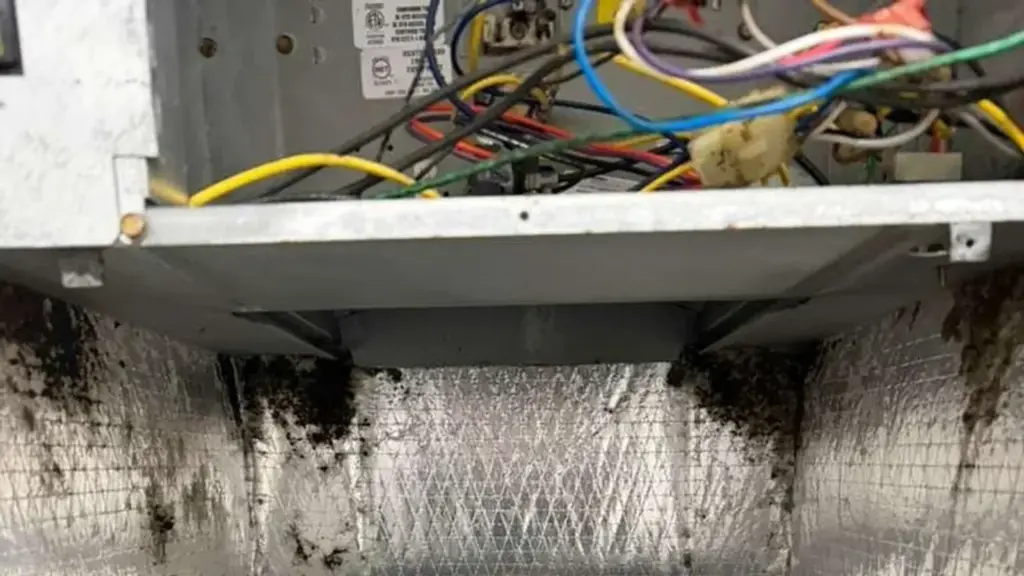
The Real Cost of Neglected Air Duct Cleaning in Tampa Homes
You notice the AC running longer than usual, a faint musty smell drifting from the vents, or a thin film of dust resettling on furniture the day after you cleaned. Those small signals add up, and in Tampa’s climate they add up faster than in almost any other city in the country. Ignoring them does not make the problem pause, it compounds it, quietly inflating your energy bills, shortening your HVAC system’s lifespan, and degrading the indoor air quality your family breathes every day.
Why Tampa’s Climate Makes Duct Neglect Especially Costly
Tampa sits in one of the most humidity-intensive metro areas in the continental United States. Average relative humidity regularly exceeds 70 percent, and the city experiences a prolonged warm season that keeps air conditioning systems running for eight to ten months of the year. That combination creates conditions inside ductwork that are fundamentally different from what homeowners in drier climates face.
When warm, moisture-laden air repeatedly cycles through a duct system, it deposits microscopic particles, encourages organic growth on interior duct surfaces, and accelerates the buildup of debris around coils and registers. The humidity-driven buildup process is well documented locally, and it means that the standard national guidance of cleaning every three to five years is often too conservative for Tampa properties. Homes near the bay, in low-lying neighborhoods, or with older flex-duct systems tend to accumulate contamination even faster.
What Dirty Air Ducts Actually Do to Your Energy Bills
The most direct financial consequence of neglected ductwork is reduced system efficiency. When debris coats the interior walls of supply and return ducts, airflow resistance increases. Your air handler fan works harder to push conditioned air through the same routes, consuming more electricity in the process. Restricted airflow also forces the system to run longer cycles to reach the thermostat setpoint, compounding the energy draw.
A dirty evaporator coil, often the downstream result of years of unfiltered debris moving through the system, reduces the coil’s ability to transfer heat. The refrigerant cannot absorb heat as efficiently, so the system’s effective cooling capacity drops even though it is consuming the same amount of power. In Tampa’s nine-month cooling season, even a modest drop in efficiency translates to a meaningful increase on every monthly utility bill.
Beyond the coil, clogged or partially blocked registers reduce the volume of conditioned air reaching living spaces. Homeowners often respond by lowering the thermostat, which pushes the system to work even harder. It is a feedback loop that originates with dirty ducts and ends with an overworked, prematurely aged HVAC unit.
The Hidden Costs That Show Up Later: Equipment Damage and Repairs
Energy waste is the cost you feel monthly. Equipment damage is the cost you feel all at once, usually at the worst possible time. Neglected ductwork contributes to several categories of HVAC component failure that are expensive to address.
- Blower motor strain: Running continuously against elevated airflow resistance causes the blower motor to overheat and wear faster. Motor replacements are a significant repair expense and can sideline your cooling system during Tampa’s peak summer heat.
- Evaporator coil fouling: Debris that bypasses filters and coats the coil can eventually require a professional coil cleaning or, in severe cases, coil replacement, which is one of the more costly HVAC repairs a homeowner can face.
- Drain line blockages: Organic debris in ducts contributes to condensate drain line clogs. A blocked drain line causes the condensate pan to overflow, which can damage ceilings, walls, and flooring and trigger the system’s safety shutoff.
- Premature system replacement: An HVAC system that runs inefficiently and under elevated stress for years will reach the end of its useful life sooner than one that is properly maintained. In Tampa, where systems run almost year-round, this timeline compression is particularly pronounced.
For a deeper look at what drives professional service pricing, the local humidity factors article explains the conditions that make Tampa ductwork particularly vulnerable.
If you want it handled correctly the first time, consider professional air duct cleaning in Tampa.
Indoor Air Quality in Tampa: What Accumulates in Neglected Ducts
The duct system is essentially the respiratory system of your home. Over time, without professional ac duct cleaning, the interior surfaces accumulate a mixture of materials that recirculate through every room every time the system runs.
Common accumulations in Tampa homes include:
- Fine particulate dust and skin cell debris
- Pet dander (Tampa’s year-round outdoor lifestyle means pets move in and out frequently)
- Pollen from the region’s extended growing season
- Mold spores and organic growth encouraged by the persistent humidity
- Insulation fibers from aging flex duct systems common in homes built before the 1990s
- Construction debris in homes that have undergone renovation
None of these are inert. Homeowners often notice that the air feels stale or that household dust accumulates more quickly than it should. While we do not make medical claims, maintaining cleaner indoor air quality in Tampa is a reasonable goal for any household, particularly those with young children, elderly residents, or anyone sensitive to airborne particles.
HVAC Duct Cleaning Cost Factors: What Determines the Price in Tampa
Understanding what drives the cost of professional duct cleaning helps homeowners evaluate quotes accurately and avoid surprises. Several factors influence the scope and pricing of any ac duct cleaning job in Tampa.
| Cost Factor | Why It Matters in Tampa | Impact on Scope |
|---|---|---|
| System size and number of vents | Larger homes have more linear footage of ductwork and more registers to clean | More access points, longer labor time |
| Duct material and age | Many Tampa homes built before 1995 use older flex duct that degrades and traps debris differently than rigid metal | May require gentler technique or reveal replacement needs |
| Degree of contamination | Tampa’s humidity accelerates buildup; systems not cleaned in many years require more intensive work | Longer service time, possible additional treatments |
| Duct accessibility | Attic-run ducts (common in Tampa slab-on-grade construction) can be harder to access than basement systems | Affects labor efficiency and access point placement |
| Presence of organic growth | High humidity increases the likelihood of mold-like growth inside ducts | May require antimicrobial treatment in addition to mechanical cleaning |
| System layout complexity | Homes with multiple air handlers or zoning systems have more components to address | Proportionally more work per handler |
The key takeaway is that the longer a system goes without professional attention, the more intensive the cleaning required, and the more likely it is that the technician will identify downstream issues like duct damage or coil fouling that add to the overall remediation cost. Scheduling cleaning on a reasonable cycle is nearly always less expensive than addressing years of accumulated neglect in a single visit.
Tampa’s Housing Stock: Why Local Homes Face Specific Duct Challenges
Tampa’s residential construction history creates a distinct set of duct-related vulnerabilities that homeowners elsewhere simply do not face in the same way. A large portion of the city’s single-family housing stock was built during the 1970s, 1980s, and early 1990s, when flex duct (flexible plastic-and-foil duct wrapped in insulation) was the dominant installation material. That generation of flex duct is now decades old in many homes, and it is prone to sagging, tearing, and interior liner degradation that creates rough surfaces where debris clings rather than passing through.
Tampa’s slab-on-grade construction means there are no basements. Ductwork is almost universally routed through attic spaces, where summer temperatures routinely exceed 140 degrees Fahrenheit. That thermal stress accelerates the breakdown of duct materials and the adhesives used in connections, creating gaps and leaks that pull unconditioned attic air, along with whatever particles are in it, directly into the duct system.
Many Tampa homeowners rely on expert air duct cleaning in Tampa for exactly this.
Newer construction in the Tampa suburbs often uses better-sealed rigid duct systems, but those homes are not immune. High-humidity conditions affect every duct system, and even newer homes benefit from periodic professional inspection and cleaning to catch early-stage buildup before it becomes a more significant problem.
If you are uncertain whether your system’s ductwork is still in serviceable condition or approaching the point where cleaning alone is not sufficient, our guide to humidity’s effect on local duct systems covers the warning signs in detail.
How Neglected Ducts Connect to Other Home Systems
Ductwork does not operate in isolation. The condition of your air ducts affects, and is affected by, other systems in your home. Two connections are worth understanding specifically in the Tampa context.
The Dryer Vent Connection
Homes with laundry rooms that share wall or ceiling cavities with HVAC ductwork can experience cross-contamination when dryer vents are improperly installed or have developed leaks. Lint and moisture from a compromised dryer vent can enter nearby duct pathways, accelerating buildup and introducing additional combustion risk. The signs your dryer vent needs attention are worth reviewing alongside your duct maintenance schedule, since both systems benefit from periodic professional inspection.
Filtration and the Duct Cycle
Your HVAC filter is the primary defense against debris entering the duct system. A filter that is changed infrequently, or one that is undersized for the system’s airflow, allows particles to bypass and accumulate inside the ducts. Conversely, a filter that is too restrictive for the system’s fan capacity reduces airflow and can cause its own set of efficiency problems. Maintaining the right filter on the right schedule is a meaningful part of duct care, but it does not substitute for periodic professional cleaning of the duct interior itself.
When to Schedule Air Duct Cleaning in Tampa
There is no single universal answer, but several conditions make scheduling a professional cleaning a reasonable priority for Tampa homeowners.
- It has been more than three years since the last professional cleaning (or you have never had it done)
- You notice visible dust or debris around supply registers
- The home has recently undergone renovation or construction work
- You have moved into a home and have no documentation of prior duct cleaning
- The system has experienced a condensate overflow or water intrusion event
- Energy bills have increased without a clear explanation
- The system runs noticeably longer than it used to in order to reach the set temperature
- There is a persistent musty or stale odor when the system runs
If several of these apply simultaneously, the case for scheduling a professional inspection and cleaning is strong. The cost of a cleaning is predictable and finite. The cost of continuing to run a compromised system is open-ended and grows over time.
Ready to stop guessing and get a clear picture of your system’s condition? Schedule your Tampa duct cleaning with Ecovent Dryer Duct Solutions and get a thorough assessment from a team that understands what Tampa homes actually deal with.
Ready for the next step? Learn how air duct cleaning services in Tampa can help and reach out to the team.
Frequently Asked Questions
How often should Tampa homeowners schedule air duct cleaning?
Most Tampa homes benefit from professional duct cleaning every two to four years, rather than the national average of three to five, because the region’s high humidity accelerates debris and organic buildup inside duct systems. Homes with pets, recent renovations, or older flex-duct systems may need attention on the shorter end of that range.
Can dirty air ducts really increase my energy bills?
Yes. Debris buildup inside ducts increases airflow resistance, which forces the blower motor to work harder and run longer cycles to maintain the thermostat setpoint. Over a Tampa cooling season that spans most of the year, even a modest efficiency loss compounds into a meaningful increase in monthly utility costs.
What is the difference between air duct cleaning and dryer vent cleaning?
Air duct cleaning addresses the HVAC system’s supply and return duct network, which circulates conditioned air throughout your home. Dryer vent cleaning addresses the separate exhaust pathway that carries hot, lint-laden air from your dryer to the outside. Both are distinct services, though homes benefit from having both maintained on a regular schedule. See whether dryer vent cleaning is worth it for Tampa homes for more on that service.
Will duct cleaning fix a musty smell coming from my vents?
A musty odor when the system runs often indicates organic growth or accumulated debris on duct surfaces or the evaporator coil. Professional cleaning removes the material that harbors and circulates those odors. If the smell persists after cleaning, a technician can assess whether the coil or drain pan requires additional attention.
Does homeowner’s insurance cover duct cleaning or damage from neglected ducts?
Standard homeowner’s insurance policies generally treat duct cleaning as routine maintenance and do not cover it. Damage from a sudden, accidental event (such as a burst pipe that floods the duct system) may be covered depending on the policy, but gradual deterioration from neglect typically is not. Requirements vary by policy and insurer, so reviewing your specific coverage with your agent is the right approach.
How do I know if my ducts need cleaning versus replacement?
Cleaning is appropriate when the duct structure is intact and the issue is accumulated debris. Replacement becomes necessary when ductwork is physically damaged, has collapsed sections, has significant air leaks at connections, or is made of a material (such as deteriorated older flex duct) that cannot be restored to serviceable condition through cleaning alone. A professional inspection can distinguish between the two scenarios clearly.
The Bottom Line for Tampa Homeowners
Neglected air ducts in Tampa are not a static problem. The city’s humidity, the long cooling season, and the characteristics of the local housing stock all work together to accelerate contamination and magnify the downstream costs. Every month a dirty duct system runs, it costs a little more in energy, puts a little more strain on expensive equipment, and circulates a little more debris through your living spaces.
Professional air duct cleaning in Tampa is a maintenance investment with a clear return: lower operating costs, reduced repair risk, and a system that performs the way it was designed to. If your home is overdue, the right time to address it is before the next cooling season puts maximum demand on a system that is already working against itself.
Contact Ecovent Dryer Duct Solutions to schedule your professional duct cleaning in Tampa and get a straightforward assessment of what your system needs.