
How to Choose a Quality Duct Cleaning Service in Tampa
Most homeowners assume any licensed HVAC contractor can handle duct cleaning, but the equipment, process, and standards between providers vary far more than the marketing suggests. In Tampa specifically, where humidity rarely drops below uncomfortable levels and air conditioning runs nearly year-round, the difference between a thorough cleaning and a superficial one shows up fast, in the form of dust reappearing within weeks, musty odors returning, or visible mold growth resuming inside supply vents. This guide walks through the two broad approaches contractors use, the criteria that actually separate them, and the questions worth asking before you book anyone.
If you want to understand what a complete service looks like before comparing providers, the professional air duct cleaning guide for Tampa covers the full scope of what the process should include.
Approach 1: Truck-Mounted Negative Air Pressure Cleaning
Truck-mounted systems use a large vacuum unit, typically housed in a service van, to create negative air pressure throughout the entire duct system. A technician attaches the vacuum to the main trunk line, seals all registers, then uses compressed air tools, rotary brushes, and agitation whips to dislodge debris from duct walls while the vacuum pulls everything toward a collection point outside the home.
This method is widely considered the industry benchmark. The NADCA (National Air Duct Cleaners Association) standard requires that the entire HVAC system, including the air handler, coil, and all supply and return branches, be placed under negative pressure during cleaning. Truck-mounted units generate enough suction to meet that requirement in most residential configurations.
For Tampa homes, this matters because the region’s humidity encourages biofilm and mold to adhere to duct walls rather than sitting loosely as dry dust. Dislodging that material requires mechanical agitation combined with strong extraction, not just suction alone. After cleaning, a quality provider will also apply an EPA-registered antimicrobial agent to interior duct surfaces, which helps slow the return of microbial growth in humid conditions.
One consideration: truck-mounted systems require parking access close to the home and may not be practical for high-rise condominiums or homes with restricted driveway access. In those cases, a high-powered portable unit rated to NADCA standards is an acceptable alternative, provided the technician can document the static pressure achieved during the job.
Approach 2: Portable Vacuum and Brush Systems
Portable units are smaller, self-contained vacuum systems that a technician carries into the home. They range widely in quality. Professional-grade portable units designed for HVAC duct work can generate sufficient negative pressure for smaller duct systems, while consumer-grade or undersized units, sometimes used by low-bid operators, lack the airflow to extract debris effectively from longer duct runs.
The challenge with portable systems is not the format itself but how they are used. A portable unit operated correctly, with proper register sealing, systematic branch-by-branch cleaning, and documented airflow readings, can produce results comparable to a truck-mounted system in a smaller home. The problem is that portable equipment is also what gets used in “blow-and-go” jobs where a technician runs a vacuum near a few vents, collects a payment, and leaves without cleaning the air handler, coil, or return plenum.
Tampa’s older housing stock, particularly ranch-style homes built between the 1960s and 1990s in neighborhoods like Seminole Heights, Carrollwood, and New Tampa, often has fiberglass duct board or flex duct rather than sheet metal. Fiberglass duct board is porous and can harbor microbial growth differently than metal; portable systems without adequate agitation tools may leave contamination embedded in the liner surface. Ask any contractor working on older duct board systems whether they adjust their process for that material specifically.
If you want it handled correctly the first time, consider professional air duct cleaning in Tampa.
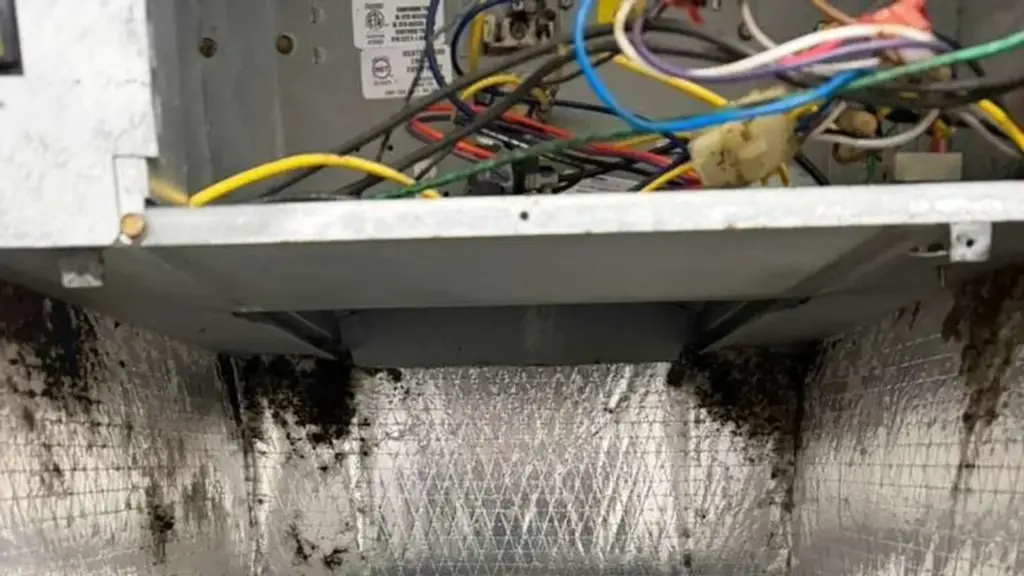
For a closer look at what mold growth inside ducts actually looks like and when it becomes a serious concern, see how to identify mold in Tampa HVAC ducts.
Comparing the Two Approaches for Tampa Homes
The table below contrasts the two methods across the criteria most relevant to Tampa’s climate and housing conditions. Note that neither column includes pricing because the right choice depends on your home’s duct configuration, not on which option is cheaper.
| Criterion | Truck-Mounted Negative Air | Portable Vacuum System |
|---|---|---|
| Suction power for long duct runs | High; consistent across the full system | Variable; depends heavily on unit rating and setup |
| Effectiveness on mold-adhered debris | Strong when paired with mechanical agitation | Adequate if agitation tools are used correctly |
| Suitability for Tampa’s humid climate | Well-suited; supports full antimicrobial treatment | Suitable if process includes sanitizing step |
| Access requirements | Requires vehicle access near the home | No vehicle access needed; works in condos and tight spaces |
| Risk of incomplete cleaning | Low when operated by trained technicians | Higher if undersized unit or abbreviated process is used |
| NADCA compliance potential | Meets standard in most residential applications | Can meet standard with professional-grade equipment and documentation |
Which Is Right for Tampa Homes?
For most single-family homes in Tampa, a truck-mounted system operated by a technician who follows the full NADCA process, including air handler cleaning and post-cleaning sanitizing, is the more reliable choice. The climate here simply does not forgive a partial job. When relative humidity stays elevated for most of the year and air conditioning cycles run almost continuously, any organic debris left on duct surfaces has a favorable environment to support microbial growth within a few months.
That said, the equipment type matters less than the process. A contractor using a professional-grade portable unit who cleans every component, documents the negative pressure achieved, and applies an EPA-registered sanitizer will outperform a truck-mounted operator who skips the air handler and coil. The questions you ask before booking, covered in the next section, matter more than any single equipment preference.
Townhomes, condominiums, and homes in densely built Tampa neighborhoods where parking access is restricted may have no practical choice but a portable system. In those situations, ask the contractor specifically about their unit’s CFM rating and whether they have documentation showing it meets NADCA’s minimum airflow requirements for your system size.
For context on what drives the scope and complexity of a cleaning job, what affects duct cleaning costs in Tampa explains the variables that determine how involved a service needs to be.
Questions to Ask Before You Book
Many Tampa homeowners rely on expert air duct cleaning in Tampa for exactly this.
Asking the right questions before a service visit separates contractors who follow a documented process from those who do not. Here are the ones worth raising:
- Do you clean the air handler, evaporator coil, and return plenum, or just the duct branches? A complete job covers the entire system. If the answer is “just the ducts,” the most contaminated components may be left untouched.
- Will you place the system under negative pressure during cleaning, and can you show me the readings? Any reputable contractor should be able to document this.
- Do you use mechanical agitation tools, such as rotary brushes or air whips, or only vacuum suction? Suction alone does not dislodge debris that has bonded to duct surfaces in humid conditions.
- Do you apply an EPA-registered antimicrobial treatment after cleaning? In Tampa’s climate, this step meaningfully extends the time before dust and microbial growth return. For more on why, see how to prevent dust from returning after duct cleaning.
- Are your technicians NADCA-certified or trained to NADCA standards? Certification is not the only marker of quality, but it indicates the technician has been trained on the association’s process requirements.
- Will you provide a written scope of work before starting? A written scope protects you and gives you a reference point if something is skipped.
A contractor who answers these questions clearly and without hesitation is demonstrating process confidence. One who deflects, offers vague answers, or pivots immediately to price is worth approaching with caution.
The complete guide to air duct cleaning in Tampa goes deeper on what each phase of a professional service should look like, which makes it a useful reference when evaluating what a contractor is actually proposing.
Red Flags Specific to Tampa’s Market
Tampa’s year-round demand for HVAC services means duct cleaning is a competitive market, and not every operator maintains the same standards. A few patterns worth watching for:
Unusually short visit times. A thorough cleaning of a standard Tampa single-family home, typically 1,500 to 2,500 square feet with a single air handler, takes several hours when done properly. A job completed in under an hour almost certainly skipped major components.
No inspection before quoting. Duct systems in Tampa vary significantly. Homes built before the 1980s may have duct board or metal duct in poor condition; newer construction in areas like Westchase or Fish Hawk often uses flex duct with different cleaning requirements. A contractor who quotes without asking about your system type or inspecting the air handler is not tailoring the service to your home.
Pressure to add services without showing you why. Upselling sanitizing or coil cleaning is reasonable when the technician can show you visible contamination. Pressure to add services before any inspection has taken place is a different matter.
No written documentation afterward. A professional service should leave you with a record of what was cleaned, what equipment was used, and what, if anything, was found during the inspection. This documentation is also useful if you later need to demonstrate maintenance history to a home insurer or buyer.
Ready for the next step? Learn how air duct cleaning services in Tampa can help and reach out to the team.
Frequently Asked Questions
How often should Tampa homeowners schedule duct cleaning?
Most homes benefit from a professional cleaning every three to five years, though Tampa’s humidity and year-round AC use can push that closer to every three years for homes with older duct systems or pets. If you notice persistent musty odors, visible dust at registers shortly after cleaning, or worsening indoor air quality, an earlier inspection is reasonable.
Is NADCA certification required for a contractor to do quality work?
Certification is not legally required, but it indicates a technician has been trained on documented industry standards. A non-certified contractor who follows the same process and can demonstrate it with equipment readings and written documentation may do equally good work. The certification is a useful baseline signal, not the only one.
Does Tampa’s climate make duct cleaning more urgent than in other cities?
The combination of high humidity, heavy pollen seasons, and near-continuous AC operation does accelerate dust and microbial accumulation inside duct systems compared to drier climates. Homes that go several years without cleaning in Tampa are more likely to develop mold-related issues inside the ductwork than similar homes in lower-humidity regions.
What is the difference between duct cleaning and duct sanitizing?
Cleaning removes physical debris, dust, and biological matter from duct surfaces through mechanical agitation and vacuum extraction. Sanitizing applies an EPA-registered antimicrobial agent to interior surfaces after cleaning to reduce microbial regrowth. In Tampa’s climate, both steps together provide more lasting results than cleaning alone.
Should I be present during the cleaning?
Being present, at least at the start and end of the job, allows you to see the before-and-after condition of key components and ask questions in real time. A reputable contractor will welcome your presence and walk you through what they found during the inspection.
Can duct cleaning help with dust that keeps reappearing on furniture?
It can reduce the volume of particulates circulating through the system, and homeowners often notice a difference in how quickly surfaces accumulate dust after a thorough cleaning. However, filter maintenance, sealing duct leaks, and controlling indoor humidity also play a significant role. Cleaning the ducts without addressing those factors may produce only temporary improvement.
Making a Confident Decision
Choosing a duct cleaning contractor in Tampa comes down to process transparency more than any single equipment preference. Ask about what gets cleaned, how negative pressure is documented, whether sanitizing is included, and what written record you will receive. A provider who answers those questions clearly and can show their work is worth your confidence regardless of whether they arrive with a truck-mounted unit or a professional-grade portable system.
Ecovent Dryer Duct Solutions serves Tampa homeowners with a process built around complete system cleaning, not just accessible duct runs. If you are ready to schedule a service or want to talk through what your home’s system needs, reach out to our team directly for a straightforward assessment.