
7 Signs Your HVAC Ducts Have Mold Growth in Tampa Homes
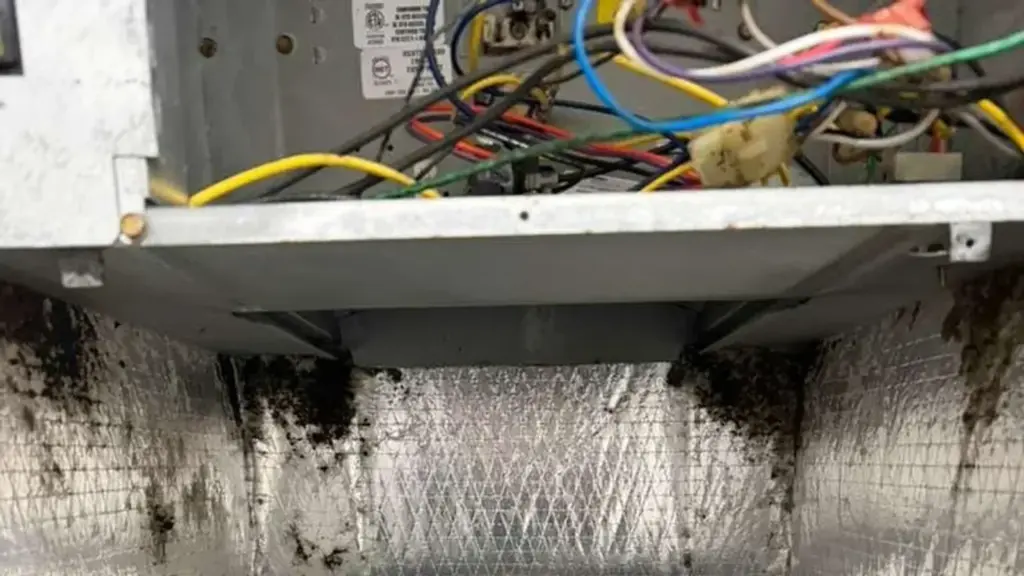
What does mold in your air ducts actually look like, and how would you even know it’s there? The short answer: it rarely announces itself clearly. For Tampa homeowners, the combination of year-round heat and some of the highest ambient humidity levels in the continental United States creates near-perfect conditions for mold and mildew to take hold inside HVAC ductwork, often long before anyone notices. These seven warning signs can help you catch the problem early, before it spreads further into your ventilation system.
1. A Persistent Musty or Earthy Smell When the AC Runs
The most common early signal is an odor, specifically a damp, musty, or faintly earthy smell that appears the moment your air conditioner kicks on and then fades after a few minutes. That timing matters. If the smell were coming from a surface in the room, it would be constant. When it surges with airflow and then dissipates, the source is almost certainly inside the duct system itself. In Tampa’s climate, where AC units run most of the year, condensation regularly forms on the interior walls of supply and return ducts. That moisture, combined with dust and organic debris already in the system, gives mold spores exactly what they need to colonize. If you notice this smell recurring across multiple rooms or at multiple vents, the growth is likely not isolated to one small section of ductwork.
2. Visible Dark Spots Around Vent Covers or Registers
Take a close look at the vent covers and registers throughout your home, particularly the return-air grilles that pull air back into the system. Dark gray, greenish-black, or brownish discoloration around the edges of a vent cover is a visible indicator that something is growing nearby. Some of that discoloration may simply be accumulated dust, but when the pattern is irregular, fuzzy-looking, or concentrated in spots rather than evenly distributed, mold is a realistic explanation. In older Tampa homes with metal duct systems, condensation tends to collect at the joints and seams closest to the registers, making the area immediately inside and around the vent opening a common location for early growth. Wipe the register with a damp cloth; if the dark material returns within a few days, it is biological, not just dust.
3. Worsening Dust Levels Even After Cleaning
If you want it handled correctly the first time, consider professional air duct cleaning in Tampa.
Mold growth inside ducts is almost always accompanied by a buildup of organic debris, and that debris gets distributed through the home every time the system cycles. If you find yourself dusting surfaces more frequently than you used to, or if a fine layer of particulate seems to reappear within a day or two of cleaning, the duct system deserves a closer look. This is especially relevant in Tampa homes built before the mid-1990s, which often have fiberglass duct board interiors that degrade over time and shed material into the airstream. Degraded duct lining combined with moisture creates a surface that is particularly hospitable to mold. Our article on why Tampa’s humidity drives dust buildup in air ducts explains the relationship between moisture and particulate accumulation in more detail.
4. Tampa’s Climate: Why Local Homes Face Higher Mold Risk
This is not a generic warning that applies everywhere equally. Tampa’s average relative humidity hovers between 70 and 90 percent through much of the year, and the city’s subtropical climate means there is rarely a prolonged dry season that would naturally suppress mold growth the way northern winters do. When humid outdoor air infiltrates a duct system, whether through leaks at joints, at the air handler cabinet, or through gaps around registers, it meets the cooled interior surfaces of the ductwork and condenses. That condensation is a recurring moisture source that does not require a flood or a plumbing leak to cause a problem. Homes in low-lying Tampa neighborhoods, particularly those near Old Hillsborough River corridors or in areas with high water tables, tend to have elevated indoor humidity baselines that compound the issue. Crawl-space duct runs, common in many Tampa-area ranch-style homes built in the 1960s and 1970s, are especially vulnerable because they sit in an environment where ground moisture is constantly present. HVAC duct sanitizing is often a necessary step in these situations, not simply an optional add-on to a standard cleaning.
5. Increased Allergy-Like Symptoms Indoors
Sneezing, nasal congestion, itchy eyes, or a scratchy throat that seems to ease when you leave the house and return when you come back indoors are patterns worth paying attention to. These are not medical diagnoses, and this article is not making any health claims, but homeowners frequently notice that certain physical discomforts correlate with time spent at home, particularly in rooms that receive the most airflow from the HVAC system. Mold spores circulating through ductwork become part of the air you breathe indoors, and for people who are sensitive to airborne particulates, that can make a real difference in how they feel day to day. If symptoms seem tied to specific rooms, check whether those rooms have return-air vents or whether they are the first supply registers off the air handler, as those locations tend to receive the highest concentration of anything traveling through the duct system.
Many Tampa homeowners rely on expert air duct cleaning in Tampa for exactly this.
6. Condensation or Water Stains on or Near Duct Surfaces
If you have access to your ductwork, whether in an attic, a utility closet, or a crawl space, look for water staining on the exterior of flex duct or rigid duct sections. Rust streaks on metal duct, water rings on duct board insulation, or soft, compressed sections of flex duct are all signs that moisture has been present long enough to cause structural changes. In Tampa attics, where summer temperatures can exceed 140 degrees Fahrenheit, improperly insulated or disconnected duct sections create dramatic temperature differentials that accelerate condensation. That same attic environment is also warm enough to support rapid mold growth once moisture is present. Water stains on the ceiling near a supply register, even without an obvious roof leak, can sometimes trace back to a condensation problem at the duct itself rather than a roofing issue. A professional inspection can clarify the source.
7. Your HVAC System Has Never Been Cleaned or Sanitized
This one is straightforward. If you have lived in your Tampa home for several years and the duct system has never been professionally cleaned, the statistical likelihood that some degree of mold, mildew, or heavy dust accumulation is present increases with every passing year. This is especially true if the home was built more than 15 to 20 years ago, if the previous occupants had pets, or if the home sat vacant for any period with the HVAC system running unattended. Mold does not need a dramatic event to get started; it needs moisture, organic material, and time. All three are reliably present inside an aging, uncleaned duct system in a subtropical climate. HVAC duct sanitizing, as part of a comprehensive cleaning process, addresses not just the visible debris but the microbial load on duct surfaces that a vacuum alone cannot fully resolve.
For a full explanation of how professional cleaning addresses these issues at the source, see our complete guide to air duct cleaning in Tampa. If you are also evaluating service providers, how to choose a duct cleaner in Tampa walks through the key questions to ask before scheduling.
Ready for the next step? Learn how air duct cleaning services in Tampa can help and reach out to the team.
Frequently Asked Questions
Can mold in HVAC ducts spread to other parts of the home?
Yes, it can. Once mold establishes itself on a duct surface, the airflow through the system can carry spores to other sections of ductwork and to the rooms the system serves. Addressing the growth promptly, rather than waiting to see whether it worsens, is generally the more practical approach.
Is duct sanitizing the same as duct cleaning?
Not exactly. Cleaning removes physical debris, dust, and biological material from duct surfaces using mechanical agitation and vacuum extraction. Sanitizing applies an EPA-registered antimicrobial treatment to the cleaned surfaces to address residual microbial contamination. In Tampa’s humid climate, sanitizing is often recommended alongside cleaning when mold or mildew indicators are present, rather than as a standalone service.
How do I know if the musty smell is from ducts or somewhere else in the home?
The clearest indicator is timing: if the smell intensifies immediately when the HVAC system turns on and then fades within several minutes, the source is almost certainly inside the duct system or at the air handler. A smell that is constant regardless of whether the system is running is more likely to come from a wall cavity, a crawl space, or another building surface. A professional inspection can confirm the source.
Mold inside a Tampa home’s HVAC system is a problem that tends to get worse rather than better on its own, particularly given the region’s climate. If several of these signs sound familiar, a professional inspection and professional air duct cleaning service is the most reliable next step. Reach out to Ecovent Dryer Duct Solutions Tampa to schedule an assessment and find out exactly what is happening inside your ductwork.