
Why Tampa’s Humidity Causes Extreme Dust in Air Ducts
Indoor air can hold two to five times more pollutants than outdoor air, and in a city where relative humidity routinely sits above 70 percent, those pollutants have an unusually sticky surface to cling to inside your ductwork. Tampa homeowners often notice their vents look grimy within months of a cleaning, and the region’s climate is a big reason why. This article answers the questions Tampa residents most often ask about dust in air ducts, humidity, and what it all means for their HVAC system.
What does humidity actually do to dust inside a duct?
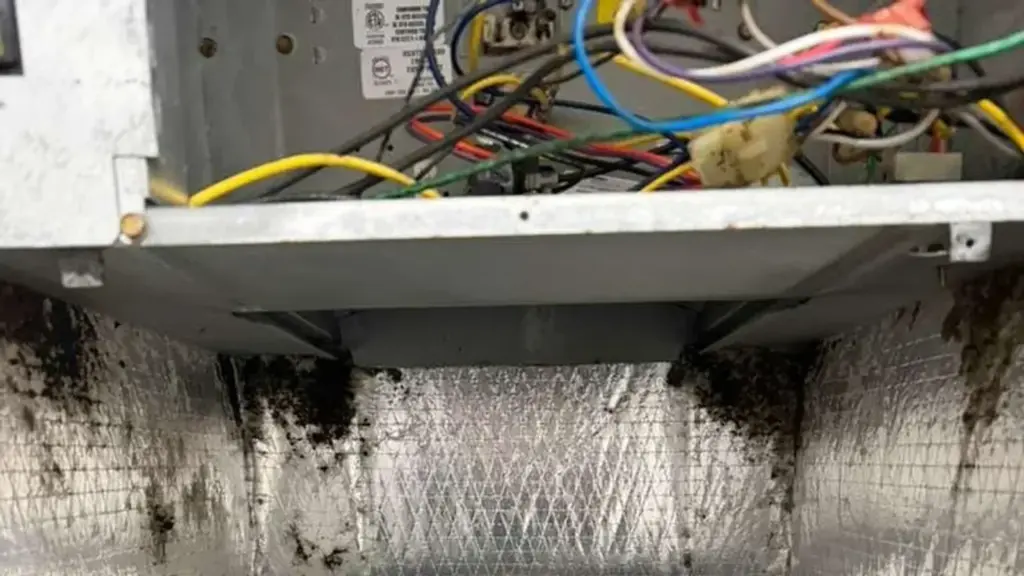
Dust is not a single substance. It is a mixture of skin cells, textile fibers, pollen, pet dander, and fine soil particles. In a dry climate, these particles stay light and loose, making them easier for a filter to capture before they settle. In a humid environment, moisture binds those particles together into a denser, stickier mass. The interior surfaces of sheet-metal and flex ducts develop a thin film of condensation during cooling cycles, and that film acts like a trap for airborne particles. Over time, layer after layer of damp debris accumulates on duct walls, liner seams, and around register boots, restricting airflow and cycling the buildup back into living spaces every time the system runs.
Why is Tampa’s climate so much harder on ductwork than other Florida cities?
Tampa sits at the convergence of the Gulf of Mexico and Tampa Bay, which keeps dew points elevated for most of the year. Even during the drier winter months, overnight humidity regularly climbs into the 80-percent range. The city averages roughly 50 inches of rain annually, much of it falling in intense afternoon thunderstorms from June through September. That seasonal moisture pattern means air conditioning systems run almost continuously for half the year, creating repeated cycles of cooling and brief warm-up that encourage condensation inside ducts. Cities further inland experience longer dry spells that allow duct interiors to air out; Tampa rarely gets that reprieve.
How does pollen make the dust problem worse in Tampa?
If you want it handled correctly the first time, consider professional air duct cleaning in Tampa.
The Tampa Bay area has a year-round pollen season rather than a single spring peak. Oak pollen is heavy in late winter and early spring, grass pollen peaks in summer, and ragweed carries through fall. Because pollen grains are relatively large and slightly sticky on their own, they adhere readily to the moisture film already coating duct walls. Once pollen is embedded in that damp layer, it becomes a binding agent that captures even smaller particles like mold spores and fine dust. The result is a composite buildup that is far denser than simple household dust and significantly harder to remove without professional equipment. For a closer look at what mold-related buildup looks like and when it becomes a concern, see our guide on mold signs in Tampa HVAC ducts.
Does pet dander behave differently in humid duct systems?
Pet dander consists of microscopic flakes of skin and dried saliva proteins. In low humidity, dander is so light it stays suspended in the air long enough for filters to catch it. In Tampa’s humid conditions, dander absorbs moisture and becomes heavier, causing it to drop out of the airstream and settle on duct surfaces rather than reaching the filter. This means a significant portion of dander never gets captured by even a high-MERV filter, instead accumulating inside supply and return ducts. Homeowners with dogs or cats in Tampa often find that dander-laden dust builds up noticeably faster between cleanings than the industry’s general guidance would suggest, simply because the local climate skews the physics of how particles travel through a duct system.
What happens inside Tampa’s older duct systems specifically?
A large share of Tampa’s residential housing stock was built between the 1960s and the 1990s, when flex duct with fiberglass inner liners was the standard installation. That liner material is porous and develops microscopic tears over decades of thermal expansion and contraction. In Tampa’s climate, those micro-tears trap moisture and debris at the same time, creating pockets of buildup that standard airflow cannot dislodge. Older homes in neighborhoods like Seminole Heights, Carrollwood, and South Tampa frequently have duct runs that have never been professionally cleaned, meaning decades of humid-season accumulation may be coating the liner. Homes that have also had roof or plumbing leaks face an even higher risk, since any water intrusion near a duct can seed persistent buildup that ordinary filter changes will not address. Understanding professional air duct cleaning in Tampa becomes especially relevant for any home built before the mid-1990s.
Many Tampa homeowners rely on expert air duct cleaning in Tampa for exactly this.
Can changing filters more often solve the humidity-dust problem?
Upgrading to a higher-MERV filter and changing it on schedule is genuinely helpful, but it addresses only the particles that reach the filter. In a humid duct system, a significant fraction of particles have already settled on duct walls before they make it back to the return plenum. Additionally, a very dense filter can restrict airflow enough to lower system efficiency and, paradoxically, reduce the velocity that would otherwise carry particles to the filter in the first place. Filter maintenance is an important part of ongoing care, and our article on preventing dust buildup after a cleaning covers the right filter strategy in detail. But filters alone are not a substitute for periodically removing the accumulated debris already coating the duct interior.
How does the air conditioning cycle itself contribute to buildup?
Every time a Tampa AC system reaches its set point and shuts off, the duct surfaces warm slightly and the moisture that condensed during the cooling cycle begins to evaporate. As it evaporates, it leaves behind a residue of whatever particles it had captured. The next cooling cycle deposits a fresh film of moisture on top of that residue, and the cycle repeats. Over a Tampa summer, a system running eight to twelve hours a day goes through dozens of these cycles per week. Each cycle adds an almost imperceptible layer of dried debris to duct surfaces. Multiplied across months and years, this process produces the thick, mat-like buildup that technicians frequently find in ducts that appear clean from the outside. The Tampa air duct cleaning service process uses high-powered negative pressure and agitation tools specifically designed to break up this compacted, layered material.
Ready for the next step? Learn how air duct cleaning services in Tampa can help and reach out to the team.
Are there warning signs that humidity-driven dust buildup has become a real problem?
Several signals suggest the accumulation inside your ducts has reached a level worth addressing. Visible dark dust rings or streaks around supply registers are one of the clearest indicators, because they show that debris is being expelled with enough force to stain the surrounding wall or ceiling. A musty or stale odor when the system first kicks on, particularly after the system has been off overnight, points to moisture-laden debris inside the duct. Noticeably uneven airflow between rooms, where some vents feel weak even when dampers are open, can indicate that buildup is partially blocking a run. If you have noticed any of these in your Tampa home, checking for early mold indicators in your ductwork is a sensible next step before the situation progresses.
How often should Tampa homeowners have their ducts cleaned given the local climate?
General industry guidance from NADCA (the National Air Duct Cleaners Association) suggests cleaning when inspection reveals meaningful contamination rather than on a fixed calendar schedule. In Tampa’s climate, that inspection interval is realistically shorter than in drier regions. Homes with pets, older flex duct, or a history of water intrusion near the air handler often benefit from inspection every three to four years rather than the five-to-seven-year range sometimes cited for temperate climates. After any flooding event, roof leak, or prolonged period of high indoor humidity, an inspection is worth scheduling promptly rather than waiting for a routine interval. A qualified technician can assess the actual condition of your duct interior and give you a realistic picture of what is there. If you are weighing options, our guide to choosing a duct cleaner in Tampa explains what to look for in a qualified provider.
Tampa’s combination of coastal humidity, year-round pollen, and aging housing stock creates conditions where dust in air ducts accumulates faster and becomes denser than in most other markets. Filters and regular maintenance help, but they work best when the duct interior is already in good condition. If your home is overdue for an inspection or you have noticed any of the warning signs described above, reaching out to a professional who understands Tampa’s specific climate challenges is the most direct path to cleaner, better-circulating air throughout your home.