
Air Duct Cleaning in Tampa: A Complete Indoor Air Quality Guide
You notice it first as a faint, musty smell when the AC kicks on, or a thin layer of gray dust settling on surfaces you just wiped down yesterday. If you live in Tampa, that’s not a coincidence. The city’s subtropical humidity, long cooling seasons, and aging housing stock create conditions that push dust, mold spores, and debris deep into HVAC ductwork faster than in drier climates. This guide covers everything Tampa homeowners need to know about air duct cleaning, from recognizing the warning signs to understanding what a professional cleaning actually involves.
Why Tampa’s Climate Makes Duct Cleaning a Different Problem
Tampa sits in one of the most humid regions in the continental United States. Relative humidity regularly climbs above 80 percent during summer months, and the AC system runs nearly year-round to compensate. That constant cycling creates a specific set of duct problems you simply don’t see in Phoenix or Denver.
When warm, moisture-laden air meets the cooler surfaces inside supply ducts, condensation can form, especially near poorly insulated flex duct sections common in homes built between the 1970s and early 2000s. That moisture becomes a surface for mold spores, which are naturally abundant in Florida’s outdoor air, to colonize. At the same time, the system’s air handler pulls in fine particulates, pollen from Florida’s heavy spring bloom, pet dander, and construction dust from the region’s ongoing development. Over time, those particles pack into duct liners and accumulate on coil fins and blower components.
The result is a system that recirculates what it collects. For a deeper look at the specific relationship between Tampa’s humidity and dust accumulation, see how moisture drives dust buildup in Tampa ducts.
Signs Your Tampa Home’s Ducts Need Attention
Some indicators are easy to spot. Others require a closer look. Here are the most common signals Tampa homeowners report before scheduling a cleaning:
- Visible dust at supply registers. A light coating of dust on a vent cover is normal. A thick, gray-brown mat that returns within days of wiping suggests the duct interior is heavily loaded.
- Musty or stale odor when the system runs. This is one of the most consistent signs of microbial growth inside the duct system or on the evaporator coil. Tampa’s humidity makes this particularly common.
- Uneven airflow between rooms. Debris accumulation can restrict airflow through individual branch ducts, causing some rooms to feel warmer or stuffier than others.
- Increased dust on horizontal surfaces. If furniture, shelves, and ceiling fan blades collect dust noticeably faster than they used to, the duct system is often the source.
- Recent renovation or construction. Drywall dust, insulation fibers, and sawdust travel easily into return air grilles during any remodeling project.
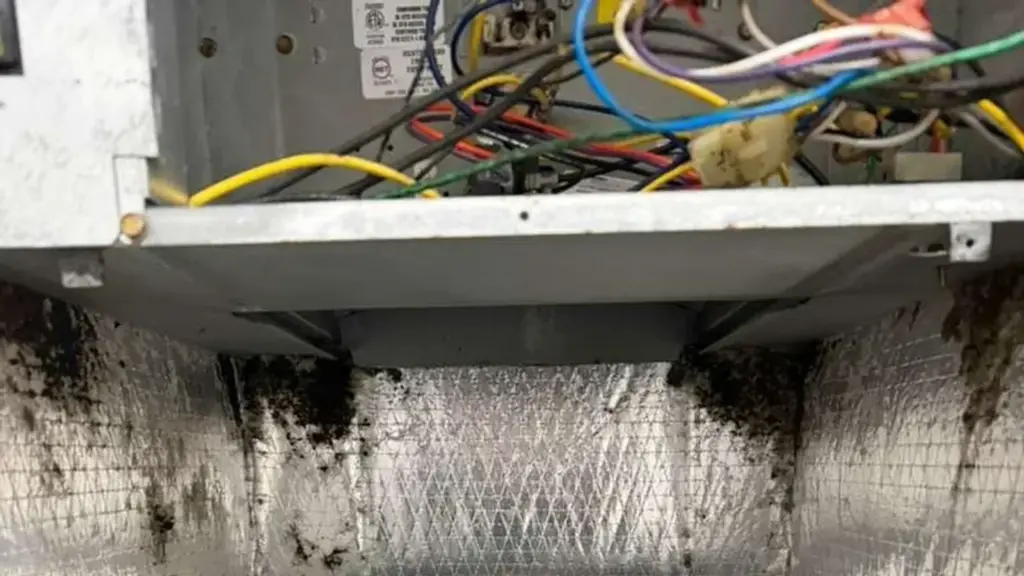
- Visible mold growth near vents or inside accessible duct sections. This warrants immediate professional evaluation. For a detailed breakdown of what mold in Tampa ductwork looks like and how it develops, read our guide on HVAC duct mold signs in Tampa homes.
- A new home purchase. Maintenance history for the duct system is rarely disclosed in a sale. A cleaning and inspection gives you a documented baseline.
What Professional Air Duct Cleaning Actually Involves
The term “duct cleaning” covers a wide range of service quality. A thorough, professional process follows guidelines established by NADCA (the National Air Duct Cleaners Association) and involves more than blowing air through the vents.
A proper service includes:
- System inspection. A technician examines accessible duct sections, the air handler cabinet, evaporator coil, blower assembly, and drain pan before any cleaning begins. This step identifies damage, leaks, or conditions (like active mold growth) that affect how the job should proceed.
- Source removal with negative air pressure. Powerful vacuum equipment is connected directly to the main trunk line, placing the entire duct system under negative pressure. This prevents dislodged debris from escaping into living spaces during cleaning.
- Mechanical agitation of duct surfaces. Rotating brushes, compressed air whips, or pneumatic tools are introduced through access holes to break loose debris that has adhered to duct liner surfaces. This step is what separates a genuine cleaning from a simple vacuum-and-go service.
- Component cleaning. The air handler cabinet, blower wheel, and evaporator coil are cleaned separately. A dirty coil or blower wheel recontaminates clean ducts almost immediately, so skipping this step undermines the entire job.
- Sanitizing, when warranted. If microbial growth is confirmed, an EPA-registered sanitizing agent can be applied to duct surfaces after cleaning. HVAC duct sanitizing is not a substitute for mechanical cleaning; it is a follow-up step applied to already-clean surfaces.
- Post-cleaning inspection and documentation. Before-and-after photos of key areas give homeowners a record of the work performed.
If you want it handled correctly the first time, consider professional air duct cleaning in Tampa.
Ready to schedule a professional cleaning for your Tampa home? Contact our team to book your air duct cleaning and get a clear picture of what’s inside your system.
Tampa’s Housing Stock: Why Duct Age Matters Here
A significant portion of Tampa’s residential neighborhoods, including South Tampa, Seminole Heights, Carrollwood, and the older sections of New Tampa, contain homes built with flex duct systems installed in the 1980s and 1990s. These systems used fiberglass-lined flexible duct that was efficient to install but has a finite service life, typically 15 to 25 years depending on conditions.
In Tampa’s climate, that lifespan is compressed. The combination of high humidity, frequent thermal cycling as the AC runs nearly every day of the year, and the region’s occasional hurricane-related pressure events causes flex duct to sag, develop micro-tears at fittings, and delaminate internally. When the inner liner begins to separate, it sheds fiberglass particles into the airstream and creates pockets where moisture and debris collect.
Homes in these neighborhoods often present a cleaning technician with ducts that are not just dirty but structurally compromised. In those cases, cleaning extends duct life and improves air quality, but a section-by-section assessment may reveal that partial or full duct replacement is the more cost-effective long-term solution. If your system is approaching or past the 20-year mark, it is worth asking your technician to evaluate the duct condition alongside the cleaning. For more on what drives service decisions in Tampa’s market, see the factors that affect HVAC cleaning costs in Tampa.
AC Duct Cleaning vs. Duct Replacement: How to Decide
Not every dirty duct system needs to be replaced, and not every aging system can be adequately restored by cleaning alone. Here is a practical comparison to help Tampa homeowners frame the decision:
| Condition | Cleaning Appropriate? | Replacement Worth Considering? |
|---|---|---|
| Heavy dust and debris, structurally intact ducts | Yes | No |
| Mold growth on duct surfaces, intact liner | Yes, with sanitizing | Possibly, if growth is extensive |
| Sagging flex duct, delaminating liner | Limited benefit | Yes |
| Crushed or kinked duct sections | No | Yes |
| Significant air leaks at joints and fittings | Cleaning alone insufficient | Yes, or targeted repair |
| System under 10 years old, first cleaning | Yes | No |
| Post-renovation debris contamination | Yes | Rarely |
If you are unsure which category your system falls into, a pre-cleaning inspection is the right starting point. Our technicians assess duct condition before recommending any service, so you get an honest answer rather than a default upsell. Schedule an inspection and cleaning estimate to find out where your system stands.
Choosing the Right Duct Cleaning Company in Tampa
Tampa has no shortage of companies offering duct cleaning, and the quality range is wide. A few criteria help separate thorough professionals from crews that will vacuum a few vents and hand you a receipt.
Many Tampa homeowners rely on expert air duct cleaning in Tampa for exactly this.
Ask about their process before booking. A reputable company should be able to describe negative-air-pressure vacuum equipment, mechanical agitation tools, and component cleaning without prompting. Vague answers about “high-powered equipment” without specifics are a signal to keep looking.
Confirm they clean the air handler components. The evaporator coil, blower wheel, and drain pan are where much of the contamination concentrates in Tampa’s humid climate. A duct cleaning that skips these components leaves the primary contamination source in place.
Ask whether they follow NADCA standards. NADCA’s ACR standard defines what constitutes a proper source-removal cleaning. Companies that reference this standard are signaling a commitment to process over speed.
Request before-and-after documentation. Photos of key duct sections and components before and after the work give you a verifiable record. This is especially important if you are cleaning ducts as part of a home purchase or insurance-related remediation.
For a full checklist of what to ask and what to watch for when comparing Tampa duct cleaning services, see our guide to choosing a duct cleaner in Tampa.
How to Keep Ducts Cleaner Between Professional Cleanings
A professional cleaning is not a permanent fix, but the interval between necessary cleanings can be extended significantly with a few consistent habits. Tampa homeowners have specific factors to manage that homeowners in drier climates do not.
Use a quality air filter and change it on schedule. In Tampa, a MERV 8 to MERV 11 filter strikes a practical balance between particle capture and airflow. Higher-rated filters capture more particles but restrict airflow when dirty, which stresses the blower and can increase moisture problems in the duct system. Check filters monthly during peak cooling season; Tampa’s AC runs hard from April through October.
Control indoor humidity. Keeping indoor relative humidity below 60 percent reduces the conditions that allow mold to establish on duct surfaces. A whole-home dehumidifier or a properly sized AC system (not oversized, which short-cycles and leaves humidity behind) is the most effective approach.
Seal return air pathways. Gaps around return air grilles, especially in older Tampa homes where grilles are cut into drywall or wood paneling, allow unfiltered air to bypass the filter entirely. Sealing these gaps with appropriate caulk or gaskets means more air passes through the filter before entering the duct system.
Keep supply registers clear. Furniture, rugs, and drapes placed over supply vents create low-airflow zones where condensation and debris accumulate. Keeping registers unobstructed maintains consistent airflow through all duct branches.
Ready for the next step? Learn how air duct cleaning services in Tampa can help and reach out to the team.
For a structured post-cleaning maintenance plan specific to Tampa’s conditions, our guide on preventing dust buildup after AC cleaning walks through each step in detail.
Frequently Asked Questions
How often should Tampa homeowners have their air ducts cleaned?
Most HVAC professionals recommend a cleaning every three to five years for typical Tampa homes. Homes with pets, recent renovations, occupants with respiratory sensitivities, or visible mold near registers may benefit from more frequent service. Because Tampa’s AC runs nearly year-round, duct systems here accumulate debris faster than in climates with shorter cooling seasons.
Does duct cleaning help with mold in Tampa homes?
Professional duct cleaning removes the debris and organic material that mold feeds on, and HVAC duct sanitizing can be applied to cleaned surfaces to address residual microbial contamination. However, cleaning alone does not eliminate the underlying moisture conditions that allow mold to grow. Humidity control and addressing any condensation issues in the duct system are necessary alongside cleaning for lasting results.
How long does a professional duct cleaning take for a typical Tampa home?
A thorough cleaning of a standard single-story Tampa home with one air handler typically takes three to five hours. Larger homes with multiple systems, homes with heavily contaminated ducts, or jobs that include evaporator coil cleaning may take longer. Be cautious of any service that promises a complete job in under two hours for a full home.
Will duct cleaning make my AC run more efficiently?
A clean evaporator coil and blower wheel can measurably improve system efficiency because debris on these components reduces heat transfer and airflow. Cleaning the duct interior alone has a smaller direct effect on efficiency, but removing restrictions in branch ducts can improve airflow balance and reduce how hard the blower works to maintain set temperatures.
Is HVAC duct sanitizing always necessary after cleaning?
No. Sanitizing is appropriate when a technician confirms microbial growth on duct surfaces, typically through visual inspection or testing. For ducts that are dusty but show no signs of mold or bacterial growth, a thorough mechanical cleaning is sufficient. Applying a sanitizer to ducts that do not need it is an unnecessary expense.
Can I clean my own air ducts?
Homeowners can remove and wash vent covers, vacuum visible debris from the first few inches of accessible duct openings, and keep filters changed on schedule. These steps help, but they do not reach the main trunk lines, blower assembly, or evaporator coil where the most significant contamination accumulates. Effective source-removal cleaning requires commercial vacuum equipment and mechanical agitation tools that are not practical for DIY use.
The Right Time to Schedule Is Before You Notice a Problem
In Tampa’s climate, waiting for obvious symptoms, persistent odors, visible mold, or noticeably degraded airflow, means the duct system has already been working against your comfort for some time. A proactive cleaning on a reasonable schedule keeps the system operating as designed and gives a technician the opportunity to catch developing issues before they become costly repairs.
Ecovent Dryer Duct Solutions serves Tampa homeowners with thorough, documented duct cleaning that follows NADCA source-removal standards. If you have questions about your specific system or want to know what a cleaning involves for your home’s layout and duct type, reach out to schedule your Tampa air duct cleaning and get straightforward answers from a technician who knows the local conditions.