
Air Duct Cleaning in Tampa: What’s Really Different From HVAC Dusting?
Many Tampa homeowners use the terms interchangeably, but professional air duct cleaning and a quick HVAC dusting are two very different services. One reaches deep into your system; the other barely scratches the surface. Understanding the distinction can save you money, protect your equipment, and help you make a smarter call the next time your home feels stuffy or your vents look grimy.
Why Tampa Homes Face a Unique Duct Challenge
Year-Round AC Use Changes Everything
Most of the country gives its HVAC system a rest in spring and fall. Tampa does not. With cooling season stretching from roughly March through November, and humidity rarely dropping to comfortable levels even in winter, Tampa air conditioners run almost continuously. That constant airflow means your duct network is always moving air, and always collecting what rides along with it: dust, pollen, pet dander, and the fine particulates that float in through doors and windows in a busy household.
The result is that duct buildup in Tampa homes tends to accumulate faster than in drier, cooler climates. A system that might go several years without needing attention elsewhere may show significant debris accumulation here in a shorter window, especially in older homes with flex duct runs that sag or have gaps at connections.
Humidity Feeds the Problem
Florida’s relative humidity is not just uncomfortable. It creates conditions where dust and organic debris can compact inside duct walls rather than staying loose and easy to dislodge. When moisture-laden air passes through a cool duct, condensation can form, and that dampness turns ordinary dust into a denser, stickier layer. A simple wipe-down or a shop-vac pass at the register opening will not touch that kind of buildup.
The AC Coil Connection
Your evaporator coil sits upstream of your duct system. When the coil is dirty, it sheds debris into the supply air. When the ductwork itself is dirty, it recirculates that debris back through the system on the return side. The two problems feed each other. Addressing only one without the other is a partial fix at best. A thorough HVAC duct cleaning considers both sides of the airflow loop, not just the visible register covers.
What HVAC Dusting Actually Is (and Is Not)
The Surface-Level Approach
HVAC dusting typically means removing register covers, wiping the visible interior of the duct opening a few inches back, and vacuuming the cover itself. Some services extend this to running a brush a short distance into the duct. It takes care of the layer of dust you can see when you pull a cover off the wall, and it makes the registers look clean. That is genuinely useful for routine upkeep.
What it does not do is address the duct interior beyond the first foot or two. The trunk lines, the main supply and return plenums, the flexible branch runs that snake through your attic or walls, the area around the air handler itself: none of that is reached by a surface dusting. In a Tampa home where the attic can hit extreme temperatures and ductwork is often flex rather than rigid sheet metal, those hidden sections can hold years of compacted material.
When Dusting Makes Sense
Surface dusting is appropriate as a maintenance step between full cleanings. If your registers are visibly dusty but your system is otherwise functioning well and was professionally cleaned within the past few years, a wipe-down is a reasonable interim measure. It keeps the visible areas tidy and reduces the amount of loose debris that can re-enter the airstream when the system kicks on.
It is not, however, a substitute for a full cleaning when the situation calls for one. Treating a dusting as equivalent to a professional service is where many homeowners end up spending money without solving the underlying issue.
Recognizing the Difference in a Quote
When you receive a quote for duct work, ask specifically what equipment will be used and how far into the duct system the technician will reach. A professional cleaning involves negative-pressure equipment, often a truck-mounted or large portable vacuum system, combined with agitation tools (rotary brushes, air whips, or compressed-air skippers) that travel the full length of each duct run. If a quote describes only register cleaning or a brush-and-vacuum at the opening, that is a dusting, regardless of what it is called on the invoice.
What a Professional Air Duct Cleaning Actually Involves
The Negative-Pressure Method
A legitimate professional cleaning begins by connecting a high-powered vacuum collection system to the main trunk or plenum of your duct network. This creates negative pressure throughout the system, so that when debris is agitated and dislodged, it travels toward the collection unit rather than being blown into your living space. Without this step, any brushing or blowing inside the ducts simply redistributes debris rather than removing it.
The NADCA (National Air Duct Cleaners Association) standard specifies that the entire air distribution system should be placed under continuous negative pressure during cleaning. That standard exists precisely because partial approaches are ineffective. When Ecovent Dryer Duct Solutions Tampa follows this process, every section of your duct network is addressed, not just the parts a technician can reach by hand.
Agitation Tools and Full-Length Reach
Once negative pressure is established, technicians introduce agitation tools into each duct run. Rotary brushes scrub the interior walls of rigid ductwork. Compressed-air tools (sometimes called air whips or skipper balls) are used in flexible duct sections to avoid damaging the liner. These tools travel the full length of each branch run, dislodging material that has been compacting against the duct walls, sometimes for years.
This is the step that separates a real cleaning from a dusting. A rotary brush reaching 20 or 30 feet into a supply run, combined with the pull of a negative-pressure system, removes material that no surface wipe will ever touch. After agitation, the technician works systematically through every supply and return register, sealing each one in sequence so the vacuum pressure is concentrated in the section being cleaned.
What Gets Inspected Along the Way
A professional cleaning is also an inspection. Technicians look for disconnected flex duct joints, collapsed sections, improperly sealed connections at the plenum, and evidence of moisture intrusion. In Tampa’s attic environments, flex duct can sag between supports and create low spots where debris and condensation collect. Finding and flagging these issues is part of the service. If you need air duct replacement for a section that is too damaged to clean effectively, a thorough cleaning process is what surfaces that need in the first place.
The Overlap: What Both Services Share and Where They Diverge
| Feature | HVAC Dusting | Professional Duct Cleaning |
|---|---|---|
| Register cover cleaning | Yes | Yes |
| Visible duct opening (first 1-2 ft) | Yes | Yes |
| Full-length duct run treatment | No | Yes |
| Negative-pressure collection system | No | Yes |
| Agitation tools (brushes, air whips) | Rarely | Yes |
| Plenum and air handler area | No | Yes |
| System inspection during service | No | Yes |
| Appropriate for heavy buildup | No | Yes |
| Appropriate for routine upkeep | Yes | Yes (less frequent) |
Signs Your Tampa Home Needs More Than a Dusting
Visible Debris and Odor Clues
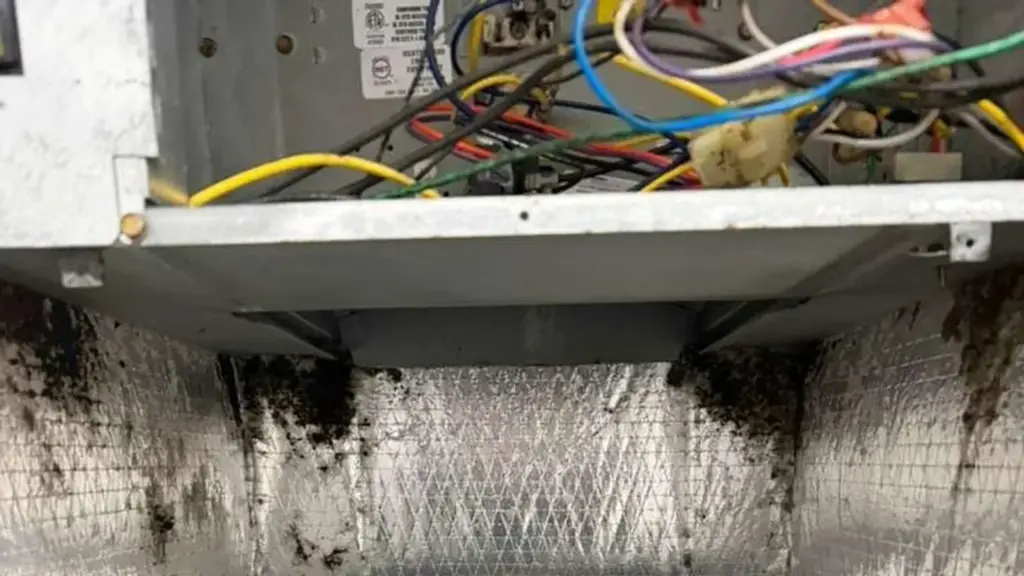
Pull off a supply register cover and shine a flashlight into the duct. A thin layer of dust near the opening is normal. What is not normal: clumps of debris, visible dark staining on the duct walls, a musty or stale odor coming from the opening, or any sign of pest activity such as droppings or nesting material. These are indicators that surface cleaning will not be sufficient.
Odors are particularly telling in Tampa. When humidity combines with organic debris inside a duct, the result is a smell that recirculates through your home every time the AC runs. Homeowners often notice the air feels stale or slightly musty without being able to identify the source. The duct system is frequently where that smell originates, and no amount of air freshener addresses it at the root.
System Performance Changes
If certain rooms in your home are consistently harder to cool than others, or if your AC seems to run longer than it used to without reaching the set temperature, debris buildup in the duct system can be a contributing factor. Restricted airflow through clogged ducts makes the system work harder to move the same volume of conditioned air. This is not always a duct problem, but it is worth ruling out as part of a broader system check.
Similarly, if you notice dust accumulating on furniture and surfaces more quickly than usual, and you have already ruled out a dirty filter as the cause, the duct interior may be shedding debris into the airstream. A fresh filter does not clean what is already coating the duct walls upstream.
Life Events That Warrant a Full Cleaning
Certain situations make a professional cleaning the right call regardless of how recently the ducts were last serviced. Renovation work, especially anything involving drywall cutting, sanding, or demolition, sends fine particulates throughout a home’s duct system. Moving into a previously owned home where the duct history is unknown is another. Pest activity that has been resolved, or any period where the system ran without a filter properly in place, also warrants a thorough cleaning rather than a surface dusting.
Choosing the Right Service for Your Situation
Questions to Ask Before You Book
Before committing to any duct service in Tampa, ask the provider to describe the specific equipment they will bring and the process they will follow. A professional cleaning provider should be able to explain the negative-pressure setup, name the agitation tools they use for flex versus rigid duct, and describe how they work through the system section by section. Vague answers or a focus only on register cleaning are signals to ask more questions.
Also ask whether the service includes the return side of the system. Many homeowners focus on supply registers because those are the visible vents in ceilings and walls. The return side, where air is pulled back to the air handler, carries just as much debris and is equally important to address. A complete air duct cleaning covers both.
How Often Tampa Homeowners Should Schedule Service
There is no universal answer, because the right frequency depends on your home’s specifics: number of occupants, pets, renovation history, age of the duct system, and how consistently filters are changed. As a general guideline, most Tampa homes with average occupancy and no unusual circumstances benefit from a professional cleaning every three to five years. Homes with pets, residents with sensitivities to airborne particles, or older flex duct systems may benefit from more frequent attention.
Between professional cleanings, changing your air filter on schedule (every one to three months depending on the filter type and household conditions) is the single most effective thing you can do to slow debris accumulation inside the duct system. A clean filter catches particulates before they enter the system. A clogged filter bypasses and sends those particulates directly into the ductwork.
What to Expect on the Day of Service
A professional cleaning at a typical Tampa home takes two to four hours, depending on the size of the system and the number of duct runs. The technician will need access to the air handler, all supply and return registers, and ideally the attic if that is where the main trunk lines run. Furniture near registers may need to be moved temporarily. The negative-pressure system means the process is largely contained, but you should expect some noise from the vacuum equipment during the service.
After the cleaning, a good technician will walk you through what was found: any damaged duct sections, areas of notable buildup, or other observations from the inspection. That walkthrough is valuable context for understanding the condition of your system and planning future maintenance. Ecovent Dryer Duct Solutions Tampa makes that post-service communication a standard part of the process, so you leave with a clear picture of what was done and what, if anything, needs follow-up.
Frequently Asked Questions
Can I tell from the outside of my vents whether I need a full cleaning?
Not reliably. Dusty register covers indicate surface buildup, but the condition deeper in the duct system is not visible without removing the cover and inspecting inside. A clean-looking register can still have significant debris further along the run, while a dusty cover may reflect only normal surface accumulation. A visual inspection with a flashlight gives more useful information than the cover alone.
Is HVAC duct cleaning the same as dryer vent cleaning?
No. These are separate systems with different functions, different risks, and different cleaning methods. HVAC ducts circulate conditioned air throughout your home. Dryer vents exhaust moist, lint-laden air from the dryer to the outside. Both benefit from periodic professional cleaning, but the tools, process, and safety considerations are distinct for each.
Will cleaning my ducts reduce dust in my home?
It can help reduce the amount of debris that recirculates through the air distribution system, which may mean less dust settling on surfaces over time. It is not a guarantee of a dust-free home, since many dust sources are unrelated to the duct system. Consistent filter changes and good housekeeping practices work alongside duct maintenance rather than being replaced by it.
How do I know if a company is doing a real cleaning versus a superficial one?
Ask to see the equipment before they start. A professional cleaning requires a high-powered vacuum collection system (truck-mounted or large portable unit) and agitation tools. If the technician arrives with only a shop vac and a brush, the service will not reach the full duct system. Reputable providers are transparent about their process and equipment.
Does Tampa’s humidity affect how often I should clean my ducts?
Humidity is a factor, but it is one of several. The bigger drivers are how consistently you change your filter, whether you have pets, and whether any renovation or construction work has occurred in the home. High humidity can cause debris to compact more densely inside ducts, which is an argument for not letting the interval between cleanings stretch too long, but it does not automatically mean you need cleaning more frequently than the general guideline suggests.
What happens if a damaged duct section is found during cleaning?
The technician should document and show you any damaged sections. Depending on the severity, options range from sealing a minor gap at a connection point to replacing a section of flex duct that has collapsed or torn. A cleaning provider who also offers duct replacement, as Ecovent Dryer Duct Solutions Tampa does, can address those findings in the same service window rather than requiring a separate appointment.
Conclusion
The gap between a surface dusting and a professional duct cleaning is significant, especially in Tampa where the AC runs hard, humidity is relentless, and duct systems take on more stress than in most parts of the country. Knowing what each service actually involves helps you ask the right questions, recognize a thorough job when you see one, and avoid spending money on a partial fix when your system needs real attention. If your ducts are overdue or you are not sure what was done the last time someone serviced your system, schedule your air duct cleaning today and get a clear picture of what is actually inside your ductwork.