
Tampa Homeowner’s Guide to Dryer Vent Installation, Repair, and Cleaning
Your dryer runs every week, sometimes every day, yet the vent system behind it rarely gets a second thought until something goes wrong. In Tampa’s humid climate, that oversight can mean lint buildup, restricted airflow, or a duct that simply wasn’t installed correctly in the first place. This guide walks through the real technical variables that shape dryer vent installation and repair work, so you know what to expect before a technician ever shows up at your door.
Why Tampa Homes Present Unique Dryer Vent Challenges
Humidity and Condensation Inside the Duct
Florida’s ambient humidity is not just uncomfortable for people; it creates conditions inside dryer ducts that homeowners in drier climates rarely face. When warm, moist exhaust air meets a cooler duct wall, condensation forms. Over time, that moisture causes lint to clump and stick rather than blow through cleanly. The result is a duct that clogs faster than the manufacturer’s maintenance schedule would predict and, in some cases, one that develops mold or mildew at bends and low points.
Proper insulation of the duct run, particularly in unconditioned spaces like garages or attics, reduces the temperature differential that drives condensation. This is a detail worth discussing with any technician doing new dryer vent installation work in a Tampa home.
Slab Construction and Routing Limitations
A large share of Tampa-area homes sit on concrete slab foundations. Unlike homes with crawl spaces, slab construction offers no easy path to route a duct downward and out through the floor. Technicians instead route through interior walls, across attic spaces, or horizontally through an exterior wall. Each choice carries trade-offs in duct length, the number of elbows required, and the overall resistance to airflow the dryer must overcome.
The International Residential Code sets a maximum equivalent length for dryer exhaust ducts (the actual maximum depends on duct diameter and elbow count), and many slab homes push close to that limit before the first elbow is even added. Knowing your home’s layout before requesting a quote helps a technician give you a more accurate assessment upfront.
Garage Laundry Rooms Are Common Here
Converted garages and laundry closets tucked into garages are far more common in Tampa than in northern markets. These setups often mean the dryer sits against an interior wall shared with living space, making a short, straight duct run impossible. Routing through the garage ceiling into the attic and then out through a roof cap or gable vent adds length and complexity. It also means the duct passes through a very hot space in summer, which affects both condensation dynamics and the choice of duct material.
Dryer Vent Installation: What the Process Actually Involves
Material Selection Matters More Than Most Homeowners Realize
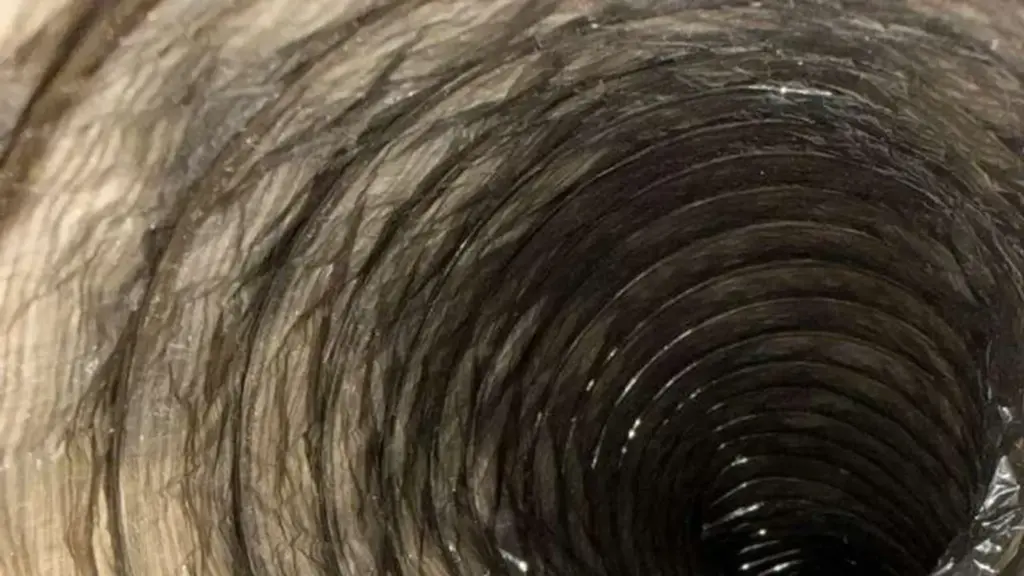
Flexible foil accordion duct is cheap and easy to find at hardware stores, but it is not the right choice for a permanent installation. The ridged interior surface traps lint at every corrugation, and the material can be crushed or kinked behind the dryer without anyone noticing. Building codes in most jurisdictions require rigid or semi-rigid metal duct for dryer exhaust, and for good reason.
Rigid galvanized steel duct offers the smoothest interior surface, the best airflow, and the longest service life. Semi-rigid aluminum duct (the flexible metal type, not the foil accordion) is an acceptable compromise where a short transition section is needed between the dryer’s exhaust port and the rigid run. Understanding which material is going where, and why, is a reasonable question to ask any technician handling your installation.
Routing, Elbows, and Equivalent Length
Every 90-degree elbow in a dryer duct adds resistance equivalent to several feet of straight pipe. Codes typically account for this by assigning each elbow an “equivalent length” that gets added to the measured duct run. A straight 25-foot run through an exterior wall is very different from a 25-foot run with three elbows, even though the tape-measure distance is identical.
Experienced technicians plan the route before cutting any holes, choosing a path that minimizes turns while still reaching an appropriate exterior termination point. In Tampa homes with complex floor plans or attic routing, that planning step can take as long as the physical installation itself.
Termination Caps and Pest Exclusion
Florida’s outdoor environment means the termination cap at the exterior wall or roof is not just about weatherproofing. It also needs to keep out insects, lizards, and occasionally birds or small rodents that find a warm duct opening attractive. Louvered caps with a proper damper flap are the standard choice. Mesh screens, despite seeming logical, are not recommended for dryer exhaust because lint accumulates on the mesh rapidly and can create a blockage or a fire hazard. Any new installation at Ecovent Dryer Duct Solutions in Tampa should include a cap appropriate for the local environment, not just the minimum code-compliant option.
What Drives Dryer Vent Repair Costs
Disconnected or Crushed Sections Behind the Dryer
One of the most common dryer vent repair calls involves a transition section that has come loose from the dryer’s exhaust port or from the wall collar behind it. The dryer keeps running, but exhaust air (and all the lint in it) vents directly into the wall cavity or the laundry room. In a Tampa home, that warm moist air in a wall cavity is an invitation for mold. Reconnecting a transition section is straightforward work, but finding the extent of any moisture damage that occurred during the disconnect period may add time to the job.
Crushed duct is a related problem, usually caused by the dryer being pushed too close to the wall. Semi-rigid aluminum transition duct handles this better than foil accordion, but even semi-rigid material has limits. If the duct has been crushed long enough to hold its deformed shape, it needs replacement rather than just repositioning.
Sagging or Improperly Supported Runs
Horizontal duct runs through walls or attics need support at regular intervals. When supports fail or were never installed, the duct sags. Low points in a sagging duct collect condensation and lint, restricting airflow and eventually causing the dryer to overheat or the thermal fuse to blow. Repairing this means accessing the duct run, adding proper hangers or straps, and cleaning out any accumulated debris. In an attic installation during a Tampa summer, that access work is genuinely demanding.
Damaged or Missing Termination Caps
Wind, lawn equipment, and general weathering can damage exterior caps. A missing or stuck-open cap lets humid outdoor air flow back into the duct when the dryer is off, accelerating lint clumping and creating conditions for mold. Replacing a cap on a ground-level exterior wall is quick work. Replacing one on a two-story roof requires proper safety precautions and is not a project to attempt without professional help. Check with your local codes on permit requirements for any exterior penetration work, since requirements vary by municipality in the Tampa area.
The Overlooked Connection: Dryer Vent Cleaning and System Longevity
Cleaning Is Not Optional Maintenance
Even a perfectly installed dryer vent system accumulates lint over time. The U.S. Fire Administration consistently identifies clogged dryer vents as a leading cause of residential dryer fires, and the risk is not theoretical. Lint is highly combustible, and the inside of a dryer duct reaches temperatures that can ignite it if airflow is restricted enough to allow buildup to concentrate near the heating element or exhaust port.
Professional dryer vent cleaning goes beyond running a brush through the accessible section near the dryer. A thorough cleaning covers the full duct run from the dryer connection to the exterior cap, uses rotary brush systems and high-powered vacuums to pull debris out rather than push it deeper, and includes an inspection of the duct’s condition while it is accessible. For Tampa homeowners, annual cleaning is a reasonable baseline, though homes with gas dryers, longer duct runs, or heavy laundry loads may benefit from more frequent service.
Signs Your Duct Needs Attention Now
A few indicators suggest the system needs cleaning or repair sooner rather than later:
- Clothes take more than one cycle to dry fully
- The dryer feels unusually hot to the touch on the top or sides
- The laundry room feels warmer or more humid than usual during a cycle
- You notice a burning or musty smell when the dryer runs
- The exterior cap flap does not open during operation, or you cannot feel airflow at the cap
- It has been more than a year since the last professional inspection
Any one of these is worth a call to a professional. Several of them together suggest the system needs immediate attention.
Cleaning vs. Replacement: How to Decide
Cleaning makes sense when the duct is intact, properly routed, and made of an acceptable material. Replacement makes more sense when the duct is foil accordion type (which should be upgraded regardless), when sections are crushed or disconnected, when the run exceeds code-allowable length, or when the duct has been exposed to significant moisture damage. A technician doing a cleaning can usually identify these conditions during the service visit and advise accordingly. At Ecovent Dryer Duct Solutions Tampa, the inspection step is part of the service, not an add-on.
Cost Drivers for Installation and Repair: A Practical Framework
Specific prices vary with market conditions, material costs, and the specifics of each home, so this guide avoids quoting figures. What it can do is explain which variables move the cost up or down, so you can evaluate quotes intelligently.
| Variable | Lower Complexity | Higher Complexity |
|---|---|---|
| Duct length | Short run, exterior wall nearby | Long run through attic or multiple walls |
| Number of elbows | One or two turns | Three or more turns to reach termination |
| Access difficulty | Open wall or accessible attic | Finished walls, tight attic, or roof termination |
| Existing duct condition | Intact, cleanable duct | Foil accordion, crushed, or mold-affected duct |
| Termination location | Ground-level exterior wall | Roof cap on a two-story home |
| Scope of work | Cleaning only | Full replacement with new routing |
When comparing quotes, ask each provider to specify the duct material they plan to use, the route they intend to take, and whether the termination cap is included. Quotes that omit these details are difficult to compare fairly.
Permits, Codes, and What Tampa Homeowners Should Know
When a Permit May Be Required
New dryer vent installation that involves cutting a new exterior penetration may require a permit in Hillsborough County or the City of Tampa, depending on the scope of work. Requirements vary, and what was acceptable under an older code may not meet current standards. This is not a reason to skip professional installation; it is a reason to use a provider familiar with local requirements. Always verify current permit requirements with your local building department, since code adoption timelines differ across municipalities in the Tampa Bay area.
Code-Compliant Materials and Termination
The key code points most homeowners are unaware of: dryer exhaust must vent to the exterior (never into an attic, crawl space, or wall cavity), the duct must be smooth-walled metal (not plastic and not foil accordion), and the termination must include a backdraft damper. If your current setup does not meet these requirements, a repair or cleaning visit is a good opportunity to bring it into compliance. A technician who spots a non-compliant condition during a dryer vent repair call should document it and explain the correction needed.
Manufacturer Requirements and Warranty Implications
Most dryer manufacturers specify maximum duct lengths and require smooth metal duct in their installation manuals. Running a dryer with a non-compliant duct can void the appliance warranty. It can also cause the dryer to run hotter than designed, shortening the life of heating elements and motors. These are not hypothetical concerns; they are the practical downstream effects of skipping a proper installation.
Frequently Asked Questions
How long does a dryer vent installation typically take?
A straightforward installation on a single-story home with a short, accessible route to an exterior wall usually takes two to four hours. Installations requiring attic access, longer runs, or roof terminations can take a full day. The planning and routing decisions at the start of the job often determine the total time as much as the physical installation itself.
Can I use flexible foil duct for my dryer vent?
Most building codes prohibit flexible foil accordion duct for dryer exhaust in permanent installations. Even where it is technically permitted for a short transition section, it is the worst-performing option for airflow and lint management. Rigid galvanized steel or semi-rigid aluminum are the appropriate choices for any run that goes inside a wall, ceiling, or attic.
How often should dryer vent cleaning happen in Tampa?
Annual cleaning is a reasonable baseline for most households. Homes with longer duct runs, gas dryers, large families doing frequent laundry, or pets that shed heavily may see lint accumulate faster and benefit from cleaning every six months. If you notice any of the warning signs described above, schedule a cleaning regardless of when the last one occurred.
What is the difference between dryer vent repair and replacement?
Repair addresses a specific problem within an otherwise sound system: reconnecting a loose section, replacing a damaged cap, or adding missing supports. Replacement involves removing the existing duct and installing a new run, typically because the existing duct is the wrong material, improperly routed, or too damaged to repair reliably. A professional inspection can distinguish between the two and recommend the more cost-effective path for your specific situation.
Is dryer vent cleaning something I can do myself?
Homeowners can clear lint from the accessible section near the dryer using a brush kit from a hardware store, and doing so between professional visits is reasonable maintenance. However, a full cleaning of the entire duct run, including inspection of all connections, the termination cap, and the duct’s structural condition, requires professional equipment and access. DIY cleaning that only addresses the first few feet of duct can create a false sense of security if lint has accumulated deeper in the system.
Does Ecovent Dryer Duct Solutions Tampa handle both installation and repair?
Yes. Ecovent Dryer Duct Solutions in Tampa handles new dryer vent installation, repairs to existing systems, and professional cleaning. If a cleaning visit reveals a condition that needs repair or replacement, the technician can explain the options and scope the additional work during the same visit when possible.
Conclusion
A properly installed, maintained dryer vent system is one of the quieter contributors to home safety and appliance longevity. In Tampa’s climate, the combination of humidity, slab construction, and common garage laundry setups makes getting the installation right more consequential than it might be elsewhere. Whether you are dealing with a new installation, a duct that needs repair, or a system overdue for cleaning, working with a technician who understands local conditions makes a meaningful difference in the outcome. Contact Ecovent Dryer Duct Solutions Tampa to schedule your dryer vent inspection today and get a clear picture of what your system actually needs.