
Air Duct Cleaning in Tampa: How to Know When Cleaning Is Enough (and When It’s Not)
Tampa’s heat, humidity, and year-round AC use create conditions that are unusually hard on ductwork. Dust, mold spores, and pest debris accumulate faster here than in drier climates, and aging flex duct deteriorates in ways that surprise even longtime homeowners. This guide walks you through the clear indicators that your system needs a professional cleaning, the warning signs that point to full replacement, and how to tell the difference before you spend money on the wrong fix.
Why Tampa Homes Face Unique Ductwork Challenges
The Humidity Factor
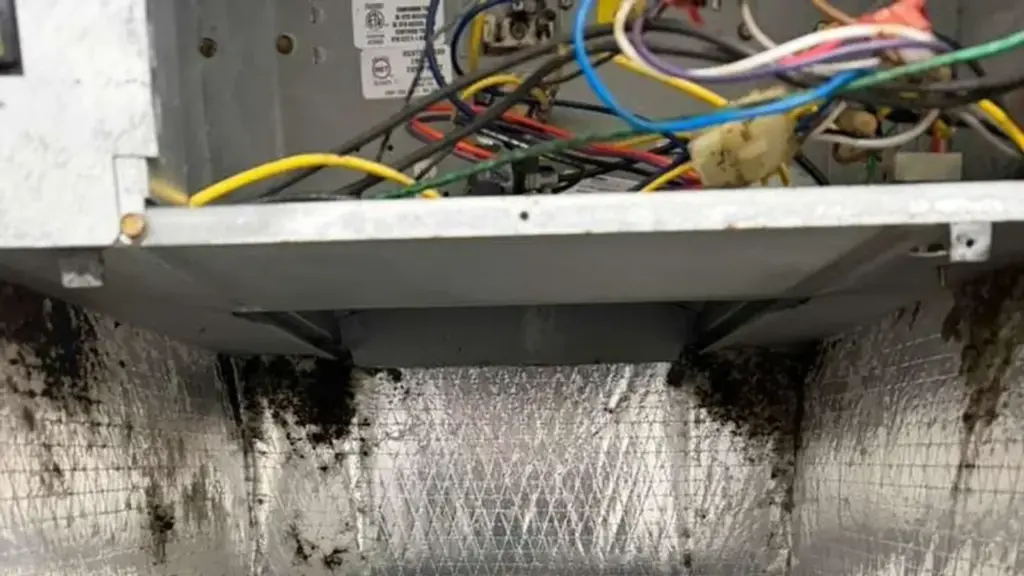
Most of Florida runs its air conditioning eight to ten months a year. That constant operation means air is cycling through your ductwork far more often than in a northern home, and the high ambient humidity in the Tampa Bay area gives airborne particulates more moisture to cling to. Dust doesn’t just settle in ducts here; it compacts, and in the presence of condensation, it can become a substrate for mold growth.
Attic-mounted ductwork is especially vulnerable. Tampa attics routinely reach extreme temperatures during summer, and when the AC kicks off, warm humid air can briefly contact the cooler interior duct surfaces and leave behind moisture. Over time, that cycle degrades insulation, weakens duct liner material, and creates conditions that a simple cleaning cannot fully reverse.
Older Homes and Flex Duct Lifespan
A significant portion of Tampa’s housing stock was built during the construction booms of the 1970s through the 1990s. Flexible duct installed during those decades has a finite service life. The inner liner becomes brittle, the insulation wrap loses its R-value, and the wire coil that maintains shape can begin to collapse. If your home is more than 20 to 25 years old and the original ductwork has never been replaced, age alone is a factor worth taking seriously during any ductwork inspection in Tampa FL.
Pest Pressure in the Tampa Bay Area
Rodents and insects find ductwork attractive for the same reasons we do: it’s temperature-controlled and protected from the elements. Tampa’s warm climate means pest season is essentially year-round. A single entry point in an attic duct run can allow nesting material, droppings, and debris to accumulate inside supply and return lines. This is one situation where cleaning alone may not be the answer, because the structural integrity of the duct may already be compromised.
Signs Your Ducts Need Cleaning, Not Replacement
Visible Dust Buildup at Registers
Pull a return-air grille off the wall and look inside with a flashlight. A light coating of dust on the duct walls within the first few inches is normal after a year or two of operation. Heavy buildup, clumps of debris, or visible pet hair accumulation further inside the duct is a clear signal that the system is overdue for a thorough cleaning. The same goes for supply registers that leave a dusty ring on the surrounding wall or ceiling.
Musty or Stale Odors When the System Runs
When you first turn on the AC after a period of disuse and notice a musty smell that fades within a few minutes, that’s often a surface-level issue: settled dust burning off or minor organic buildup near the air handler. If the odor persists every time the system runs, or if it’s noticeably stronger at certain vents, a professional cleaning may resolve it by removing the source material. Persistent odors that return quickly after cleaning, however, can point to mold growth inside duct liner material, which is a replacement indicator rather than a cleaning one.
Uneven Airflow Across Rooms
Restricted airflow caused by debris accumulation can reduce how much conditioned air reaches certain rooms. If one bedroom is noticeably warmer or cooler than the rest of the house and your HVAC technician has ruled out damper and equipment issues, a buildup-related restriction in that branch line is a reasonable suspect. Air duct cleaning often restores balanced airflow in these cases without any structural work needed.
Filter Clogging Faster Than Usual
Your air filter’s job is to capture particulates before they enter the air handler. If you’re changing a 1-inch filter every two to three weeks instead of every one to three months, something upstream is generating an unusual volume of debris. Dirty ductwork that’s shedding accumulated material is a common culprit. A cleaning addresses the source, not just the symptom.
When Cleaning Is Not Enough: Replacement Indicators
Counterintuitive as it sounds, sometimes the most cost-effective path forward is skipping the cleaning entirely and replacing the duct system. Cleaning a duct that’s structurally compromised is like washing a car with a cracked frame. The surface looks better, but the underlying problem remains.
Collapsed or Kinked Flex Duct Sections
Flex duct needs to be supported at regular intervals and routed with gradual curves. When supports fail or installers cut corners on routing, sections can collapse under their own weight or kink at sharp bends. A collapsed section restricts airflow to nearly zero regardless of how clean the rest of the system is. In Tampa attics, where access is difficult and heat accelerates material degradation, collapsed sections are more common than most homeowners realize. A camera inspection will reveal these quickly.
Duct Liner Deterioration and Delamination
The inner liner of flex duct is a thin, flexible material that can delaminate from the wire coil over time, especially in high-heat attic environments. When it does, pieces of liner material can enter the airstream and circulate through the home. If your inspection reveals delamination, cleaning the duct doesn’t fix the liner. Replacement is the only durable solution. This is one of the clearest signs you need duct replacement rather than a cleaning service.
Mold Growth Inside Duct Liner
Surface mold on metal ductwork can sometimes be addressed through cleaning and treatment. Mold that has penetrated the porous inner liner of flex duct is a different matter entirely. The liner cannot be effectively sanitized once mold has grown into the material itself. Attempting to clean it risks disturbing spores and spreading them through the system. In these cases, the affected sections need to come out.
Significant Air Leakage at Connections
Duct connections that have separated, collars that have pulled loose from the air handler or plenum, or tape that has dried out and failed all result in conditioned air being dumped into the attic instead of reaching living spaces. You can sometimes detect this by holding your hand near duct connections during system operation and feeling for airflow. A professional ductwork inspection in Tampa FL using pressure testing equipment gives you a precise measurement of how much air is being lost. Minor leakage at connections can be sealed. Widespread leakage throughout an aging system often makes replacement the more practical option.
Pest Damage to Multiple Duct Sections
A single small puncture from a rodent can be patched. A system where pests have been active for an extended period, with multiple entry points, nesting material distributed throughout, and structural damage to the duct liner, is a different situation. Cleaning removes the debris, but it doesn’t restore structural integrity to compromised sections. If your inspection reveals widespread pest damage, a full assessment of which sections are still serviceable is the right next step before committing to either path.
Cleaning vs. Replacement: A Side-by-Side Comparison
| Indicator | Likely Solution | Why |
|---|---|---|
| Heavy dust and debris accumulation | Cleaning | Structural integrity intact; buildup is surface-level |
| Musty odor, no visible mold in liner | Cleaning | Organic material can be removed without structural repair |
| Uneven airflow, no visible damage | Cleaning | Restriction likely caused by debris, not collapse |
| Filter clogging unusually fast | Cleaning | Duct shedding debris into airstream; source removal resolves it |
| Collapsed or kinked duct sections | Replacement | Structural failure; cleaning cannot restore airflow |
| Delaminated inner liner | Replacement | Material entering airstream; liner cannot be repaired |
| Mold penetrating duct liner | Replacement | Porous material cannot be effectively sanitized |
| Widespread air leakage | Replacement (often) | Sealing is viable for minor leaks; systemic failure warrants replacement |
| Ductwork over 20-25 years old with multiple issues | Replacement | Cumulative degradation makes cleaning a short-term fix at best |
| Extensive pest damage across multiple sections | Replacement (affected sections) | Structural integrity compromised beyond what cleaning can address |
What a Professional Duct Inspection Actually Involves
Camera Inspection and Visual Assessment
A thorough inspection starts with a visual walk-through of accessible duct runs, followed by camera inspection of areas that can’t be seen directly. A camera on a flexible probe can travel through supply and return lines and reveal buildup, liner condition, connection integrity, and any evidence of pest activity. This step is what separates a genuine assessment from a visual check at the registers.
Airflow and Pressure Testing
Static pressure measurements taken at the air handler tell a technician how hard the blower is working against resistance. High static pressure relative to the system’s design specifications points to restriction somewhere in the duct system. Duct leakage testing, using a device called a duct blaster, quantifies how much air is escaping to unconditioned spaces. These numbers give you an objective basis for the cleaning-versus-replacement decision rather than relying on visual assessment alone.
What to Expect During the Cleaning Process
When cleaning is the right call, a professional process involves negative pressure containment at the air handler, mechanical agitation of duct walls using brushes or compressed air tools, and collection of dislodged debris through the vacuum system before it can re-enter the living space. Supply and return lines are addressed separately, and registers are cleaned before reinstallation. The process for a typical Tampa home takes several hours. Rushing it is a sign the job isn’t being done thoroughly.
Maintaining Your Ductwork Between Professional Services
Filter Selection and Replacement Schedules
The right filter for your system is a balance between filtration efficiency and airflow resistance. A filter with a very high MERV rating captures more particles but also restricts airflow more, which increases static pressure on your blower motor. For most Tampa residential systems, a filter in the MERV 8 to MERV 11 range offers good filtration without excessive restriction. Whatever rating you choose, check the filter monthly during peak cooling season. A clogged filter is one of the fastest ways to accelerate debris buildup inside the duct system.
Keeping Registers Clear and Sealed
Supply registers blocked by furniture or rugs create pressure imbalances that can pull debris into the return system faster. Return-air grilles should be kept clear and checked periodically for gaps around the frame where they meet the wall or ceiling. An unsealed return grille pulls unconditioned attic or wall-cavity air directly into the system, bypassing the filter entirely.
Attic Access and Duct Condition Checks
If you’re comfortable in your attic, a periodic visual check of accessible duct runs is worthwhile. Look for sections that appear to be sagging between supports, connections that have pulled loose, or insulation wrap that’s torn or missing. Catching a failing support strap before a duct section collapses is far easier than dealing with the collapsed section later. If you’re not comfortable in the attic, ask your HVAC technician to note duct condition during routine maintenance visits.
How Often Should Tampa Homeowners Schedule Duct Cleaning?
There’s no universal answer, because the right interval depends on factors specific to your home. Households with pets, smokers, or residents who are sensitive to airborne particulates may benefit from more frequent service. Homes that have recently undergone renovation work, which generates drywall dust and construction debris that finds its way into duct systems, should schedule a cleaning after the project wraps up regardless of when the last one was done.
For a typical Tampa home without unusual circumstances, a professional cleaning every three to five years is a reasonable general guideline. The more important trigger, though, is the condition of the system itself. If a visual inspection shows significant buildup, that’s the signal, not the calendar. Ecovent Dryer Duct Solutions Tampa can assess your system’s actual condition and give you an honest recommendation based on what the inspection reveals rather than a predetermined service interval.
If you’ve never had your ductwork professionally inspected and your home is more than ten years old, that inspection is the logical first step. It tells you where you stand and what, if anything, needs to happen next. Schedule a professional ductwork inspection to get a clear picture of your system’s current condition before committing to any service.
Frequently Asked Questions
How do I know if my Tampa home needs duct cleaning or full replacement?
The key distinction is structural integrity. If the ducts are intact but dirty, cleaning is the right call. If sections are collapsed, the inner liner is delaminating, mold has penetrated the liner material, or there’s widespread leakage, replacement of the affected sections is the more effective solution. A camera inspection gives you the clearest answer.
Can I clean my own air ducts with a shop vacuum?
You can clean the visible portion of registers and the first few inches of duct near the opening, but a shop vacuum doesn’t have the reach or the negative-pressure containment needed to clean a full duct system. Without proper containment, agitating debris inside the duct can release it into the living space rather than capturing it. Professional equipment is designed specifically to prevent that.
What does duct replacement involve for a typical Tampa home?
Replacement typically means removing existing flex duct from the plenum connections out to each supply and return boot, then installing new insulated flex duct or rigid ductwork depending on the layout. Connections are sealed with mastic or approved tape, and the system is tested for leakage after installation. The scope varies based on how many runs are being replaced and the accessibility of the attic space.
Does Tampa’s humidity make duct problems worse than in other climates?
Yes, meaningfully so. High ambient humidity accelerates the conditions that lead to mold growth inside ductwork and speeds the degradation of flex duct liner material. Tampa’s near-constant AC operation also means the system runs far more hours per year than in cooler climates, which compounds wear on both the equipment and the duct system.
Will cleaning my air ducts improve my home’s indoor air quality?
Removing accumulated dust, debris, and organic material from duct surfaces reduces the volume of particulates that can be recirculated through the system. Many Tampa homeowners notice the air feels fresher and filters stay cleaner longer after a thorough cleaning. It’s one part of a broader approach to Tampa indoor air quality that also includes proper filtration and humidity management.
How long does a professional duct cleaning take?
For a typical single-family home in Tampa, a thorough cleaning generally takes between two and four hours. Larger homes with more duct runs, or systems with heavier buildup, take longer. A job completed in under an hour is unlikely to have been done with the thoroughness the process requires.
The Bottom Line for Tampa Homeowners
Your duct system works harder in Tampa than almost anywhere else in the country. That’s not a reason for alarm, but it is a reason to pay attention. Knowing the difference between a system that needs cleaning and one that needs replacement saves you from either underspending on a problem that won’t go away or overspending on replacement when cleaning would have done the job. The starting point is always an honest inspection by someone who will tell you what they actually find.
Ecovent Dryer Duct Solutions Tampa is ready to assess your ductwork and give you a straight answer. Book your air duct inspection today and find out exactly where your system stands.