
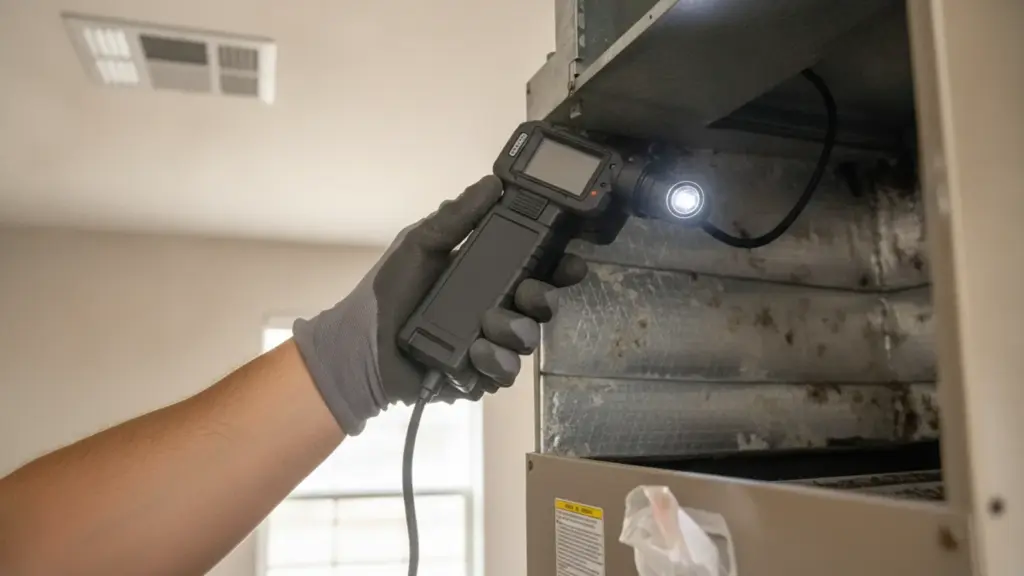
Why Tampa Humidity Causes Mold in AC Ducts
According to regional meteorological records, the Tampa Bay area experiences average relative humidity levels that hover near 90 percent in the early morning hours and rarely drop below 60 percent even on hot afternoon days. For homeowners in Hillsboro and Pinellas counties, this constant moisture is more than just an outdoor discomfort. It is a direct and persistent threat to residential heating, ventilation, and air conditioning systems. When high outdoor moisture levels meet the chilled surfaces of a home’s central cooling system, the resulting condensation creates a highly fertile environment for biological growth inside your ductwork.
Understanding how coastal humidity interacts with home ventilation systems is essential for protecting your property and keeping your indoor air feeling clean and dry. To manage these heavy moisture loads, many local property owners rely on professional air duct cleaning tampa to address the organic accumulation that thrives behind their register grilles.
How does Tampa humidity physically get inside residential AC ducts?
Central cooling systems do not operate in a completely sealed bubble. Every time an exterior door opens in a local home, hot, moisture-laden air rushes inside. Additionally, many homes in the region feature unconditioned crawl spaces, attics, or garages where ductwork is routed. Because the air inside the ductwork is cooled to roughly 55 degrees Fahrenheit during an active cooling cycle, the metal or fiberglass exterior of the ducts becomes cold.
When the ambient, humid air in an attic space or wall cavity comes into contact with these cold duct surfaces, moisture reaches its dew point and condenses into liquid water droplets. This process is identical to the condensation that forms on the outside of an iced tea glass on a hot summer afternoon. If there are minor gaps, tears, or loose connections in your ductwork, this moist air is drawn directly into the supply and return streams, turning the inside of your ventilation system into a damp environment.
Why does condensation thrive inside local HVAC systems?
Condensation thrives inside local air conditioning systems due to the massive temperature differences typical of the Floridian climate. Inside a home, the thermostat might be set to a comfortable 72 degrees Fahrenheit, while the attic space housing the ductwork can easily exceed 120 degrees Fahrenheit. This extreme thermal contrast accelerates condensation along the entire length of the duct run.
Furthermore, air conditioning units are designed to pull moisture out of the air as part of the cooling process. This extracted moisture accumulates in a condensate drain pan beneath the indoor evaporator coil. If the system is not draining perfectly, or if the blower fan continues to run when the compressor is off, that pooled water re-evaporates and is pushed back through the ductwork. When you consider how often your system cycles during the peak of summer, it becomes clear that the interior of your ducts is exposed to a continuous cycle of wetting and slow drying.
What role does organic dust play in supporting duct growth?
Moisture alone is not enough to fuel biological growth inside an air conditioning system; spores also require a food source. This food source comes in the form of everyday household dust. Residential dust is not just dirt from outdoors. It is primarily composed of organic matter, including skin flakes, pet dander, pollen, textile fibers, and microscopic organic debris.
As this dust is pulled into the return vents, the finest particles bypass standard air filters and settle along the interior walls of the supply ducts. When these organic dust deposits are dampened by high humidity, they act as a soil layer. Microscopic fungal spores, which are naturally present in the outdoor atmosphere, land on this damp, nutrient-rich dust layer and quickly begin to multiply. Over time, what started as a thin film of household dust becomes a complex layer of organic accumulation that cannot be removed by simple vacuuming. Regular inspections can help catch these issues early, as detailed in our guide on signs you need duct cleaning tampa.
If you want it handled correctly the first time, consider professional air duct cleaning in Tampa.
How does the local coastal climate make this problem worse?
The geographic reality of living on the Gulf Coast means that the outdoor air is continuously saturated with moisture and microscopic organic particles. Unlike inland regions where humidity drops significantly during certain seasons, coastal areas remain damp year-round. This continuous atmospheric moisture load means that local air conditioning systems rarely have a chance to dry out completely.
Even during the milder winter months, many residents turn off their air conditioning and open their windows, allowing humid, salt-tinged air to settle inside the home. When the cooling system is turned back on, that moisture is trapped inside the ducts. Additionally, the high concentration of natural airborne spores from subtropical vegetation means that the raw ingredients for biological growth are always present in the local environment, waiting for the right conditions to settle and grow.
How does building age and attic insulation affect local ductwork?
The age and construction style of homes across the local region have a major impact on how humidity behaves inside ductwork. Older residential properties, such as mid-century bungalows or early ranch-style homes, often feature retrofitted duct systems that run through poorly insulated attics. In these properties, traditional fiberglass batt insulation may have degraded or settled over time, leaving large sections of the ductwork exposed directly to extreme attic heat.
Furthermore, older homes tend to have higher rates of air leakage through vintage window frames and plaster walls, which constantly introduces fresh moisture into the living space. In contrast, newer local developments are built with tighter envelopes, but they can still suffer from duct condensation if the attic ventilation is inadequate or if the HVAC system is oversized for the square footage. An oversized unit will cool the home too quickly without running long enough to remove moisture from the air, leaving the indoor environment sticky and humid.
What are the signs that moisture has caused growth in your ducts?
Because ductwork is hidden behind drywall and attic insulation, homeowners must watch for subtle indicators of moisture and organic growth. The most common sign is a persistent, musty odor that becomes noticeable only when the air conditioning system starts blowing. This scent, often described as smelling like damp cardboard or a wet basement, indicates that air is passing over active organic accumulations.
Another common warning sign is the appearance of dark, dusty smudges around your ceiling register grilles. While some dust around vents is normal due to static electricity, dark staining that is difficult to wipe away or that dampens the drywall surrounding the vent is a strong indicator of condensation and growth inside the boot. If you notice these issues, it is important to understand the recommended ductwork cleaning frequency in Tampa to keep the system clean.
Can a dirty dryer vent make duct moisture issues worse?
Many Tampa homeowners rely on expert air duct cleaning in Tampa for exactly this.
Many homeowners do not realize that their laundry setup can directly contribute to moisture problems within their main heating and cooling system. A standard clothes dryer expels several gallons of water vapor during a single drying cycle. If a dryer vent is clogged with lint, restricted by poor installation, or damaged, this hot, humid air cannot escape the home efficiently.
Instead, this moisture leaks back into the laundry room and surrounding living spaces, raising the overall relative humidity of the home. This extra humidity must then be managed by the air conditioner, increasing the condensation load inside your central ducts. Keeping your utility vents clean is a critical step in overall household moisture control, which is why integrated property maintenance is so valuable. To keep your system running cleanly after an intervention, refer to our practical tips on how to maintain ducts after cleaning tampa.
How do professional cleaning services address this growth?
Addressing biological growth inside air ducts requires a systematic approach that removes the source of the problem rather than simply masking it. Professional cleaning involves sealing the ventilation system and putting it under continuous negative pressure using high-efficiency particulate air (HEPA) collection equipment. This ensures that no loose dust or debris escapes into the living spaces during the process.
Technicians then use specialized mechanical brushes and air whips to agitate the interior surfaces of the metal or fiberglass ducts, loosening the damp dust and organic material so it can be pulled into the vacuum collector. This thorough process removes the nutrient layer that allows growth to return. To ensure you receive a thorough, professional-grade service, read our advice on how to choose a Tampa duct cleaner.
How can local homeowners prevent future duct moisture problems?
Preventing future moisture accumulation inside your ventilation system requires a combination of routine maintenance and humidity control. First, ensure that your home’s relative humidity remains below 55 percent by using your air conditioner consistently and utilizing dedicated dehumidifiers if necessary. Always use exhaust fans in the kitchen and bathrooms while cooking or showering, and keep them running for at least twenty minutes afterward to exhaust steam outdoors.
Second, change your system’s air filters regularly to prevent dust from accumulating on the damp cooling coils and inside the supply ducts. Finally, have a professional inspect your attic insulation to ensure your ductwork is properly shielded from extreme attic temperatures. Keeping the thermal barrier intact is one of the most effective ways to prevent condensation from forming on your ducts in the first place.
Conclusion and Next Steps
Tampa’s natural climate provides all the ingredients needed for moisture and organic growth to develop inside residential ductwork. By understanding the physics of condensation and keeping household dust to a minimum, local homeowners can protect their central air systems from the long-term effects of coastal humidity. If you have noticed musty odors, dusty registers, or high indoor humidity, it may be time to address the cleanliness of your ventilation system with a professional ac duct cleaning to restore clean, dry airflow to your living space.